
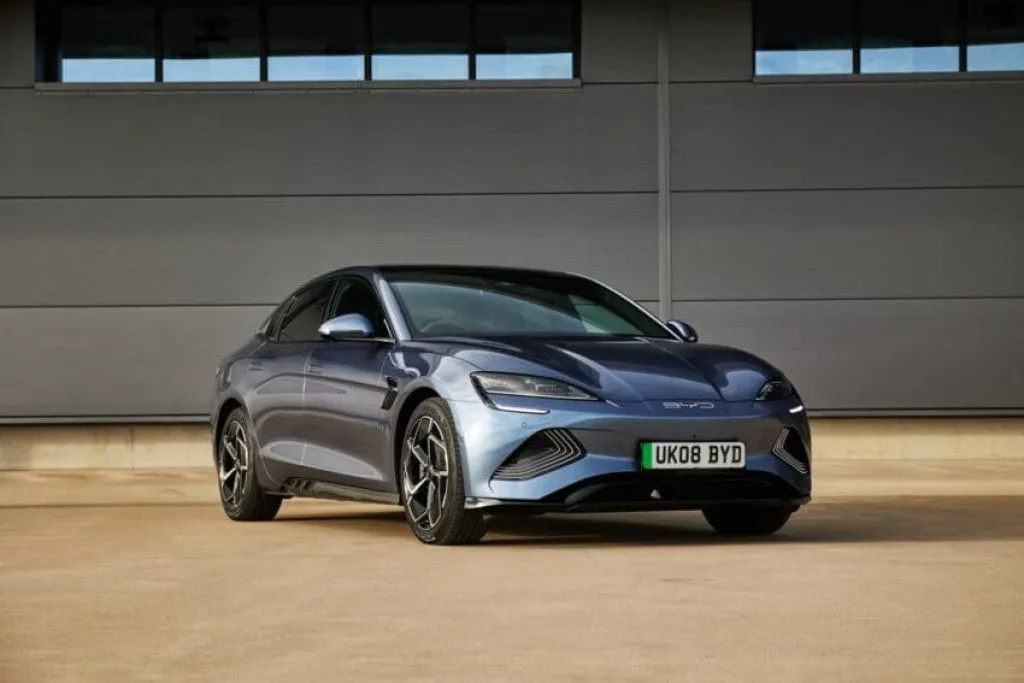
China's BYD has overtaken Tesla to reclaim the global electric vehicle market leadership, signaling a significant strategic shift in the worldwide EV landscape.
The surge by the Chinese automaker underscores intensifying domestic competition and China's growing dominance in advanced battery technology and manufacturing scale. This development marks a pivotal moment as established Western automotive giants face increasingly robust challenges from Asian manufacturers.
Market Dynamics and Competitive Gains
BYD's ascent is not merely a matter of sales volume but reflects deeper structural advantages within the Chinese industrial ecosystem. The company benefits from deep integration, particularly in its proprietary battery production, which provides cost efficiencies and supply chain resilience that competitors struggle to match.
According to reports detailing recent market performance, BYD's expanded product portfolio across various segments—from budget-friendly models to premium offerings—has allowed it to capture market share rapidly. Tesla, while maintaining a strong global presence, appears to have encountered headwinds related to production scaling and pricing pressures in key international markets.
The competitive environment is characterized by aggressive pricing strategies from Chinese firms. These companies are leveraging massive domestic manufacturing capacity to penetrate both local and overseas markets simultaneously. This dual-pronged attack complicates the established market hierarchies previously dominated by Tesla in North America and Europe.
Analysts suggest that BYD's success stems partly from its comprehensive vertical integration, controlling significant portions of its supply chain from raw materials through final vehicle assembly. This control mitigates volatility risks associated with global semiconductor shortages or fluctuating lithium prices, factors that have impacted rivals.
Global Implications and Future Trajectory
The shift in leadership carries substantial implications for the future trajectory of automotive manufacturing globally. It solidifies China's position not just as a major consumer of electric vehicles but as the definitive global production hub.
For Western automakers, this trend necessitates a rapid reassessment of their own operational models and geographic sourcing strategies. Competing against vertically integrated Chinese giants requires more than simply matching hardware specifications; it demands systemic cost reduction and localized supply chain mastery.
Tesla's response to being surpassed will be critical in determining the long-term competitive balance. The company must leverage its established brand equity, software ecosystem superiority, and existing global dealership network to counteract BYD’s manufacturing muscle.
The EV race is evolving from a technology showcase into a battle of industrial execution. BYD's current lead demonstrates that in the modern automotive sphere, production efficiency, battery innovation, and strategic state-level support remain paramount drivers of market supremacy. Investors are closely monitoring whether this momentum can be sustained through diverse geographic expansion without compromising quality control.