
🎙 Listen to a summary of this story
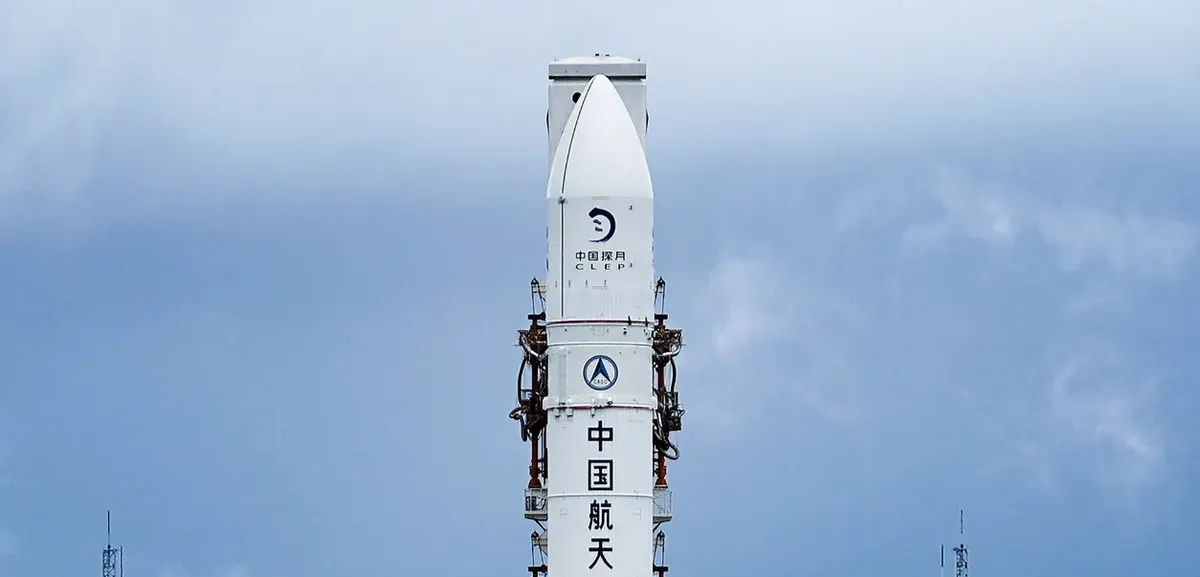
China’s ambitious Chang’e 7 lunar mission, designed to further explore the Moon's South Pole region, has been postponed following a decision announced by Chinese space agencies. The delay marks a temporary setback for what was widely anticipated as a critical step in Beijing's long-term strategy of establishing a permanent human presence and scientific outpost on Earth’s natural satellite.
Sources indicate that the postponement was implemented due to necessary technical reviews and unfavorable environmental conditions, citing operational safety protocols as the primary concern. The mission, which aims to gather detailed data from previously unexplored lunar terrains, represents a significant escalation in China's deep space exploration capabilities. Industry analysts have noted that while delays are common in complex aerospace endeavors, the rescheduling of Chang’e 7 underscores the immense technological hurdles involved in sustained extraterrestrial operations.
Mission Objectives and Technical Scope
The Chang'e series of lunar missions has consistently demonstrated China’s growing prowess in deep space technology. The seventh iteration is particularly noteworthy because of its intended focus on the South Pole, a region rich with potential scientific yields, including large deposits of water ice within permanently shadowed craters.
According to mission outlines reviewed by CNN, the primary scientific goals include deploying advanced lunar rovers and stationary instruments capable of analyzing the composition of regolith samples. These objectives are crucial for understanding the Moon's geological history and assessing its potential utility for future resource extraction.
The postponement has prompted renewed discussion regarding the stringent nature of space launch readiness. Experts suggest that while weather patterns—including atmospheric interference or solar wind activity—are always factors, the decision to delay may also reflect deep-dive checks on critical systems, ensuring maximum reliability during the high-stakes deployment phase.
Implications for China's Space Program
The Chinese space program has become a cornerstone of national technological ambition, positioning China as a global leader in scientific exploration. The success and subsequent continuity of missions like Chang’e 7 are viewed not just through a scientific lens, but also as a demonstration of advanced industrial capacity.
Analysts point out that the focus on the Moon's South Pole is highly strategic. Water ice, if confirmed and utilized, could potentially serve as propellant for deep space missions, drastically reducing the logistical burden and cost associated with interplanetary travel. This capability elevates China’s standing alongside other major space-faring nations.
Furthermore, the deployment of multiple specialized instruments—from high-resolution cameras to particle detectors—requires complex coordination between various national research institutes and private aerospace contractors. The ability to manage such a massive technological undertaking highlights the maturation of China's domestic supply chains for advanced rocketry and space hardware.
The delay, while frustrating for enthusiasts and researchers alike, provides valuable time for engineers to recalibrate systems and address any unforeseen technical anomalies identified during pre-launch simulations. The Chinese National Space Administration (CNSA) has consistently emphasized a commitment to safety above all else, a principle that guides the rescheduling process.
The global space community will be watching closely as preparations resume for Chang’e 7. Given the geopolitical significance of lunar resources and permanent scientific access points, the successful execution of this mission remains paramount to China's long-term technological and strategic development goals in outer space.