China's humanoid robot production is set for a significant boom in 2026, though deployment faces practical hurdles despite advancements from leaders like AgiBot and Unitree.
Production Surge Outpaces Immediate Operational Needs
The manufacturing capacity for sophisticated humanoid robots in China is projected to enter a substantial growth phase by 2026, driven by domestic industrial mandates and technological maturation across the sector. Companies are rapidly scaling production lines to meet escalating demand signals from various commercial and logistical sectors.
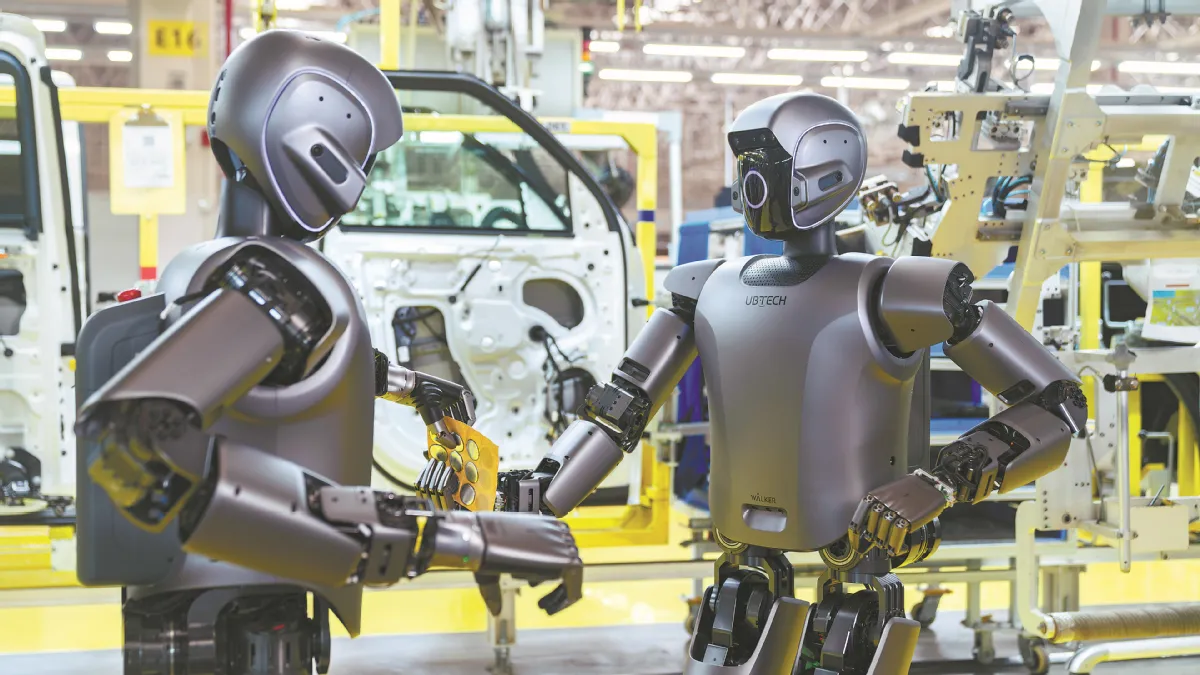
AgiBot and Unitree have emerged as key industry drivers, demonstrating robust engineering capabilities in locomotion, dexterity, and operational endurance. These firms represent the vanguard of Chinese robotics development, moving beyond laboratory prototypes into scalable industrial assets.
The current trajectory indicates a shift from purely R&D-focused deployments to large-scale commercial integration. This transition places pressure on the existing infrastructure, requiring corresponding advancements in power management and complex software integration to support mass deployment scenarios across Chinese enterprises.
Analysts suggest that while the hardware production curve is steepening significantly, the ecosystem required for seamless, widespread operation—including standardized charging protocols, sophisticated AI interaction layers, and reliable maintenance networks—is still maturing. This gap between manufacturing output and field readiness constitutes the primary strategic challenge facing the industry in the immediate term.
Deployment Realities and Future Integration
Despite the impressive production figures, the practical application of these advanced robots in real-world operational settings presents a nuanced reality check for investors and manufacturers alike. The complexity of diverse industrial environments necessitates more than just powerful hardware; it demands contextual intelligence.
Unitree’s recent advancements, for instance, showcase superior dynamic balance crucial for uneven terrain traversal, a critical factor in logistics and construction applications. AgiBot is focusing heavily on refining fine motor skills, enabling tasks requiring human-level precision that were previously prohibitive for robotic systems.
The immediate deployment focus remains concentrated in controlled environments—warehouses, specialized assembly lines, and pilot municipal projects—where environmental variables are manageable. Expanding into unstructured public or highly varied commercial settings requires further breakthroughs in sensor fusion and predictive modeling to ensure reliable performance without constant human oversight.
Future growth hinges on solving the integration problem: how to transition from high-performing demonstration units to predictable, cost-effective workhorses capable of operating autonomously within legacy industrial frameworks. The 2026 timeframe suggests a bifurcation where production volume increases dramatically, but deployment success will be measured by demonstrable reliability in diverse, complex tasks rather than sheer unit count.