🎙 Listen to a summary of this story
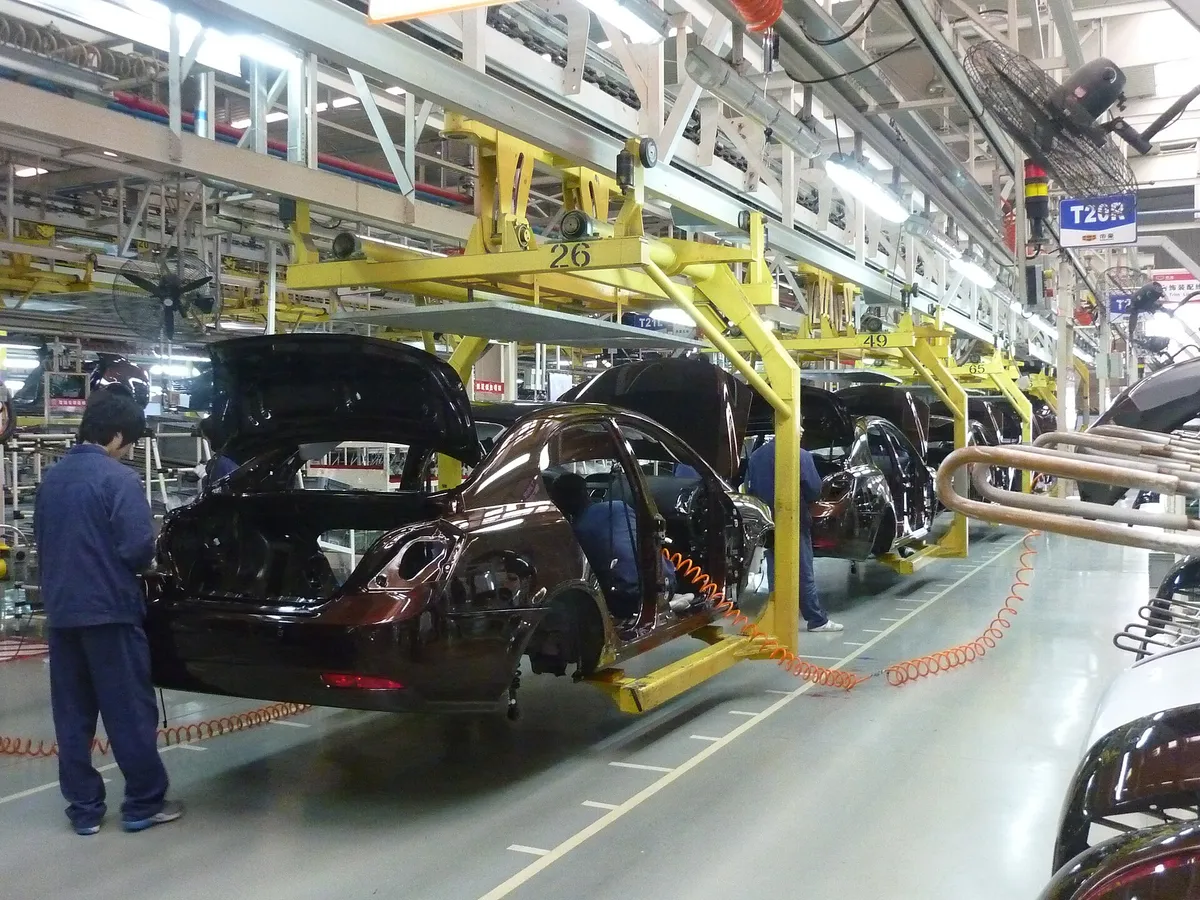
China's automotive sector is undergoing a dramatic transformation, establishing itself as a dominant force in global export markets while simultaneously navigating intense domestic competition. The industry, fueled by rapid technological advancements in electric vehicles (EVs) and battery technology, has successfully positioned Chinese brands into North America and Europe, challenging the long-held supremacy of legacy automakers from Japan, Germany, and the United States.
The shift is not merely one of volume but of technological capability. Chinese manufacturers are leveraging deep supply chain integration and advancements in software-defined vehicles to offer compelling alternatives that appeal to global consumers increasingly prioritizing sustainability and digital connectivity. Analysts suggest this export success reflects a maturing industrial ecosystem capable of scaling high-tech production efficiently.
In Western markets, the penetration rate of Chinese EVs has accelerated rapidly. Reports indicate that several major American automotive retailers are now listing models from Chinese brands alongside traditional domestic offerings. This influx is attributed to aggressive pricing strategies coupled with superior battery performance and feature sets found in many new entrants, with outlets such as The Washington Post highlighting how China is "quietly taking over" key segments, particularly in the passenger vehicle market.
Navigating the Domestic Tipping Point
While international sales shine a spotlight on China's industrial might, the domestic market presents a contrasting picture of fierce consolidation. The sheer volume of new players entering the Chinese auto space has led to an oversupply problem and heightened price wars. Industry observers note that this period of intense competition is forcing both startups and established giants to rapidly refine their business models.
According to analysis from Nikkei Asia, China's auto industry appears to be reaching a "consolidation tipping point." This suggests that the market will soon shed less efficient players, allowing stronger, more technologically advanced firms to dominate. Companies are increasingly focusing on integrated services—combining vehicle sales with subscription models for charging and software updates—to build deeper customer relationships.
This internal pressure is driving innovation in areas beyond mere hardware. Chinese manufacturers are heavily investing in proprietary operating systems, autonomous driving features, and smart connectivity packages that often surpass the offerings of competitors. The focus has shifted from simply building cars to creating comprehensive mobility ecosystems.
The success abroad provides capital and brand validation, which is crucial for domestic survival. By mastering global supply chains and meeting diverse international regulatory standards, Chinese automakers are strengthening their internal operational resilience. This dual strategy—exporting technology while streamlining domestic operations—is central to the sector's long-term growth narrative.
Implications for Global Automotive Supply Chains
The rise of China as an automotive exporter carries significant implications for global supply chains and trade dynamics. Western governments and automakers are paying close attention, recognizing both the opportunities presented by Chinese technology and the potential risks associated with over-reliance on a single source for critical components like batteries and semiconductors.
Market analysts suggest that while the current wave of exports is disruptive to established players, it also signals a fundamental restructuring of the global automotive landscape. The competitive pressure from China could accelerate the adoption of EVs globally, forcing multinational corporations to speed up their own electrification timelines.
Nikkei Asia reports emphasize that the surviving domestic leaders will be those most adept at managing both vertical integration and rapid technological pivots, solidifying China’s place as a global manufacturing powerhouse.
For international investors and automotive companies, monitoring Chinese regulatory shifts, particularly regarding data security and export controls, remains paramount. The industry's trajectory suggests that while the market is volatile, the underlying momentum toward electrification and digitalization places China at the center of the next generation of mobility solutions.