
China's Massive Scale vs. Germany's Industrial AI Specializationr
The recent opening of Xiaomi Auto's R&D facility in Munich, Germany, to develop European electric vehicle (EV) production shines a light on some of the significant differences in approaches to AI in the european state and the global superpower.
Current geopolitical trends reveal a deepening, structural schism in how the world is developing and deploying artificial intelligence. We are witnessing a fundamental pivot: global powers are moving away from the pursuit of massive, general-purpose large language models (LLMs) intended for mass consumer use, turning instead toward highly specialized, strategic applications designed to serve national interests. While the United States and China currently maintain a dominant duopoly over the consumer-facing AI market—controlling the chatbots and digital assistants that dominate daily life—a new paradigm is emerging. Through rigorous policy frameworks in Europe and intensified, state-led capital investments in Beijing, nations are signaling a decisive shift toward "functional sovereignty," where the goal is not just technological prowess, but the survival of national economic models.
Policy Intent: The Clash of Massive Scale vs. Surgical Specialization
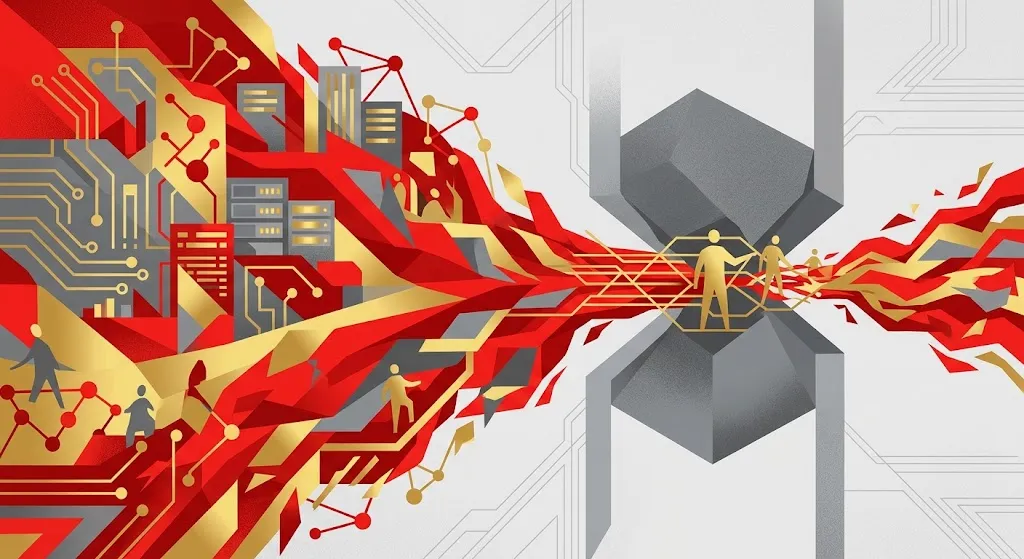
China is pursuing an aggressive, top-down integration of AI into its very national economic fabric, treating computing power as a fundamental utility akin to electricity or water. Beijing’s strategy is built on the premise that massive computational capacity can serve as a buffer against structural economic headwinds and demographic shifts. To this end, China is overseeing a monumental expansion in domestic computing infrastructure, with growth projected at a staggering 46.2% CAGR through 2028. The ultimate objective is not merely technological leadership, but a macroeconomic injection: by weaving AI into every layer of the service and manufacturing sectors, Beijing aims to pump trillions into its GDP by 2035, creating an interconnected digital economy that is resilient to external pressures.
In stark contrast, Germany—and by extension, much of the European industrial core—is adopting a policy of "niche specialization." Recognizing that it cannot win a capital-intensive arms race against the trillion-dollar ecosystems of Silicon Valley or the state-backed behemoths of China, Berlin is intentionally bypassing the consumer AI hype cycle. Instead, Germany seeks to leverage its historical manufacturing hegemony to dominate the burgeoning field of Industrial AI. By focusing on "edge intelligence"—AI that lives within the machinery of a factory rather than in a distant cloud—Berlin aims to secure technological relevance through unmatched precision and reliability, ensuring that while they may not own the chatbot, they do own the intelligent systems that power the world's most advanced production lines.
Strategic Implications: The Global Race for Practical Application
The global AI landscape is undergoing a profound metamorphosis, transitioning from a race for raw "intelligence" to a contest of practical, real-world application. The metrics of success are changing; it is no longer enough to have the smartest model, one must have the most useful implementation. China’s massive capital infusion into smart computing infrastructure aims to create an unassailable digital ecosystem, potentially setting the global standard for state-led technological regimes and creating a blueprint for how authoritarian or centralized economies can achieve high-tech dominance.
Meanwhile, Germany’s focused pursuit of industrial automation serves as a vital blueprint for other middle powers. For nations that lack the massive scale of superpowers, the path to sovereignty lies in dominating high-value, specialized vertical markets. By becoming indispensable to the global supply chain through AI-driven precision engineering and automated logistics, these nations can mitigate their dependency on American software giants and Chinese hardware dominance, carving out a space where they remain essential players regardless of who wins the consumer AI war.
Key Takeaways:
- China’s Macroeconomic Pivot: Artificial Intelligence has evolved from a niche technological priority into a foundational pillar of China's long-term GDP stability. It is being treated as a core component of national computing infrastructure designed to revitalize the service sector and offset economic stagnation.
- Germany’s Defensive Specialization: European policy is increasingly characterized by "defensive specialization." By pivoting toward Industrial AI, Europe seeks to protect its manufacturing sovereignty and maintain its economic relevance against the overwhelming consumer-market dominance of US and Chinese tech giants.
- The Bifurcation of Global Competition: The global struggle for technological supremacy is splitting into two distinct, non-overlapping fronts: China’s pursuit of massive, state-integrated computational scale versus Europe’s pursuit of high-precision, specialized industrial applications.