
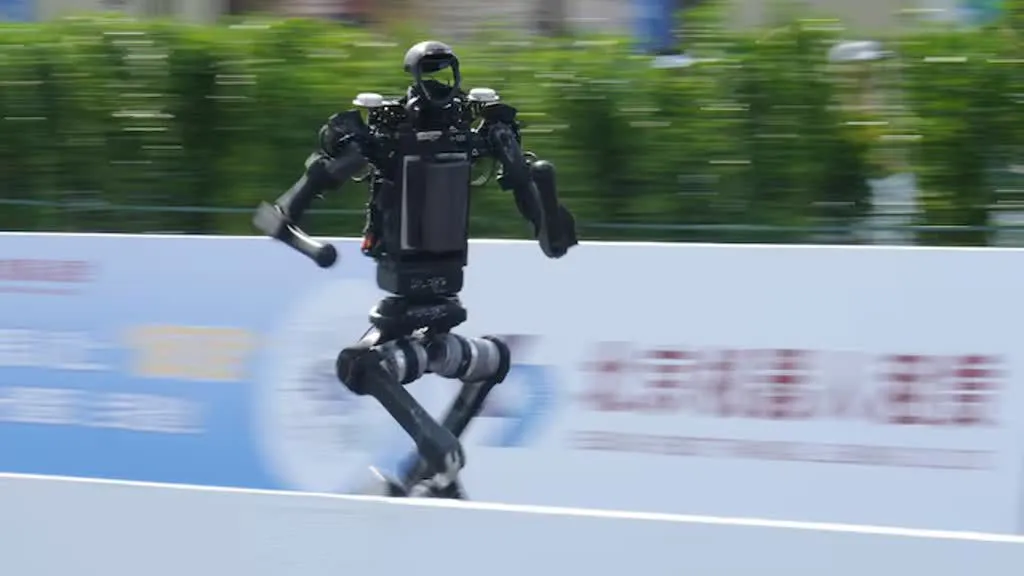
BEIJING: Chinese researchers have achieved a significant milestone in robotics, as sophisticated humanoid robots reportedly outpaced human participants during a half-marathon event in Beijing. The demonstration highlights rapid advancements in artificial intelligence and bipedal locomotion capabilities.
According to reports, these AI-powered machines displayed running gaits that closely mimic human movement while maintaining superior speed over the distance. This performance places the technology at the forefront of current efforts to create highly autonomous, physically capable robots.
The breakthrough stems from advanced algorithms governing the robots' balance and energy efficiency. Unlike previous robotic demonstrations which focused on short bursts or controlled environments, this event showcased sustained performance over a significant distance, challenging established human endurance benchmarks in a public setting.
This success signals major potential implications across several sectors. From logistics and infrastructure inspection to elder care and future military applications, robots capable of running at human pace open new avenues for deployment in complex, real-world environments. Experts suggest that such advancements push the boundaries toward general-purpose robotics.
The demonstration drew attention from both domestic and international tech observers. While these robotic feats represent a major AI breakthrough, researchers stress that the next phase involves enhancing environmental adaptability and reducing operational costs. Nonetheless, the successful race serves as compelling proof of concept for future human-robot interaction in dynamic settings.