🎙 Listen to a summary of this story
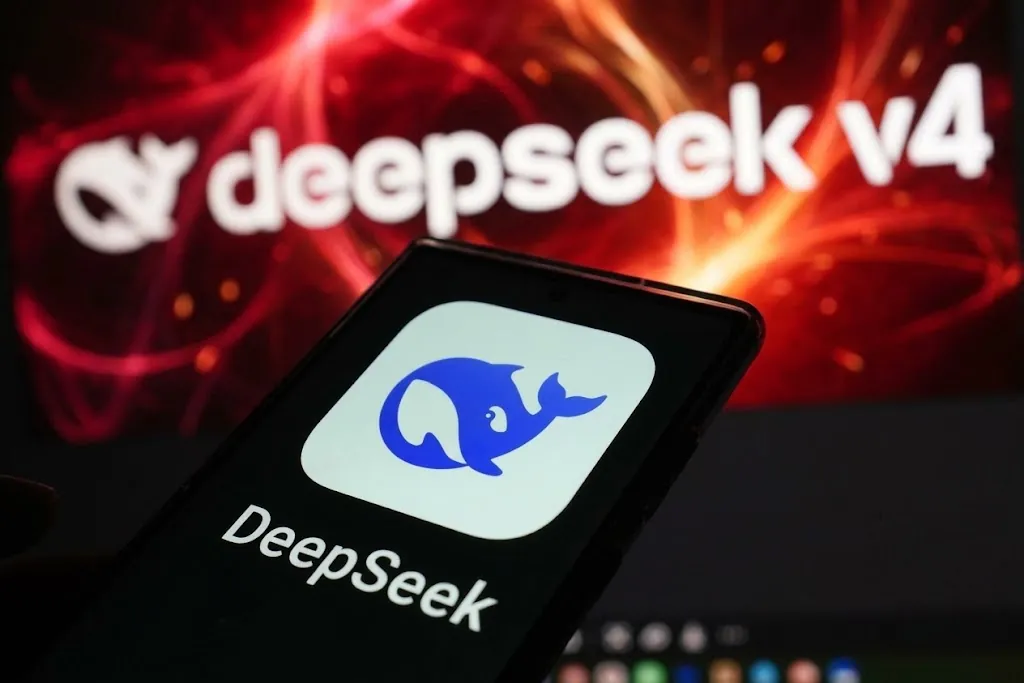
DeepSeek officially released V4.1-Flash-1017, a significant advancement distinguished by its adoption of MIT-licensed weights and enhanced agentic coding capabilities.
This release positions DeepSeek directly within the highly competitive open-source LLM landscape, offering developers access to a powerful model under permissive licensing terms that facilitates broader commercial integration. The new iteration demonstrates marked improvements in complex reasoning tasks, particularly those requiring iterative problem-solving characteristic of sophisticated programming agents.
The availability of MIT-licensed weights is strategically vital; it removes significant legal friction often associated with proprietary or more restrictive licenses, encouraging rapid adoption across diverse enterprise and research environments globally. This move solidifies DeepSeek’s commitment to fostering an open ecosystem while simultaneously scaling its model performance.
Technical Specifications and Performance Benchmarks
V4.1-Flash-1017 was benchmarked against established industry standards, showing notable strength in coding proficiency when compared to previous iterations and several competing models. The architecture refinement appears specifically tuned for instruction following and multi-step task execution, which is the core requirement for effective autonomous agents.
The model's performance on terminal benchmarks indicates a robust capability to handle complex command structures and programmatic logic, suggesting its fine-tuning focused heavily on real-world software development workflows rather than purely academic linguistic tasks. The speed optimizations inherent in the "Flash" designation suggest efficient inference times, making it practical for high-throughput production deployments.
The decision to maintain or enhance compatibility with popular programming paradigms allows developers accustomed to specific stylistic conventions to transition their tooling with minimal overhead. This usability factor is as crucial to market penetration as raw benchmark scores in the current LLM deployment cycle.
Broader Industry and Geopolitical Implications
The maturation of models like DeepSeek, particularly those adopting permissive licensing, accelerates the decentralization of AI capability away from a few dominant players. Open-weight models democratize access to high-tier performance, allowing smaller firms and academic labs to deploy cutting-edge intelligence without massive proprietary compute budgets.
Geopolitically, the proliferation of capable Chinese-backed open models presents a notable alternative narrative to the dominance asserted by U.S.-led foundational models. This strengthens the global competitive posture in AI development, pushing innovation across different technological and regulatory spheres.
For the market, this signifies an intensification of the 'open vs. closed' debate, yet one where the gap is narrowing due to performance parity. Companies are increasingly opting for open solutions that offer better transparency and data sovereignty while meeting stringent performance criteria, making models like V4.1-Flash-1017 highly attractive strategic assets.