🎙 Listen to a summary of this story
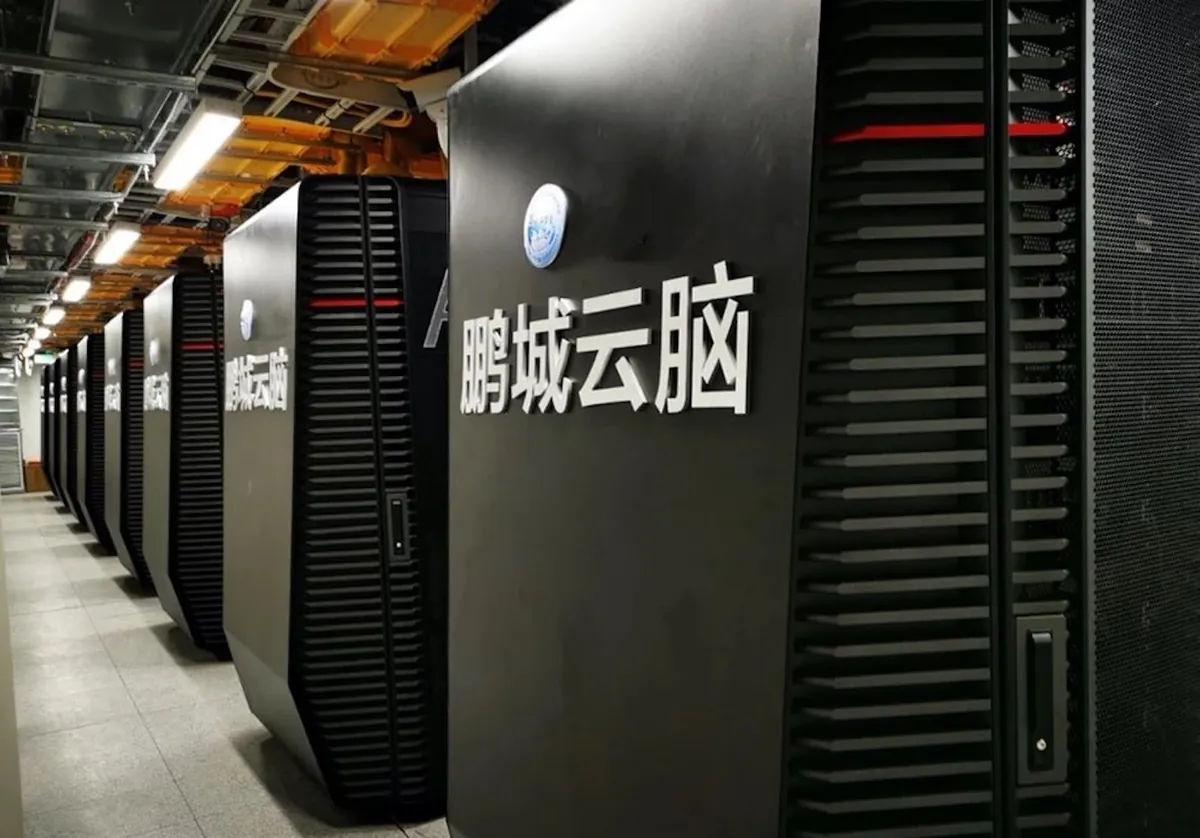
Peng Cheng has initiated the trial operation of its Cloud Brain III, deploying 10,000 petaflops (PFLOPS) of domestic AI computing power. This deployment represents a significant escalation in China's domestic efforts to build sovereign, high-performance artificial intelligence infrastructure, directly challenging reliance on international hardware suppliers.
The launch signals a maturation point for Chinese indigenous semiconductor and computing capabilities within the AI sector. By bringing 10,000 PFLOPS online, Peng Cheng is providing substantial computational resources for domestic enterprises, research institutions, and government initiatives focused on advanced AI model training and deployment.
This move aligns with broader national strategies emphasizing technological self-sufficiency amid escalating geopolitical pressures affecting global technology supply chains. The sheer scale of the trial operation indicates a commitment to moving beyond pilot projects toward large-scale, production-level AI service delivery using purely domestic stacks.
Technical Architecture and Operational Scope
The Cloud Brain III platform is engineered around cutting-edge domestic silicon architectures designed specifically for deep learning workloads. While specific chip details remain proprietary, the aggregate 10,000 PFLOPS capacity suggests a highly optimized cluster configuration capable of handling massive parallel processing tasks inherent in large language models and complex generative AI applications.
The operational trial focuses on validating system stability, scaling efficiency, and performance benchmarks against international industry standards. This rigorous testing phase is crucial for certifying the platform's viability for commercial deployment across various demanding use cases, ranging from autonomous driving simulation to advanced scientific computing.
Furthermore, the integration of this massive compute cluster implies a sophisticated software ecosystem built natively around domestic frameworks and operating systems. Ensuring seamless interoperability between proprietary hardware accelerators and established AI software libraries is central to unlocking the platform's full potential for enterprise adoption.
Strategic Market Implications and Geopolitical Positioning
The successful rollout of the Cloud Brain III places Peng Cheng at a critical juncture in China’s national technological race. It directly addresses vulnerabilities exposed by past dependencies on Western high-end AI accelerators, positioning domestic technology providers as key enablers of national digital sovereignty.
For the broader market, this signals an accelerating trend toward regionalized, self-contained AI ecosystems. Companies utilizing these services gain access to powerful compute without facing potential export restrictions or supply chain bottlenecks associated with foreign components. This fosters a robust domestic AI industry loop.
This 10,000 PFLOPS milestone is not merely an incremental hardware upgrade; it represents a strategic assertion of capability within the global high-performance computing landscape. It underscores Beijing's sustained policy focus: transforming technological self-reliance from a political aspiration into a tangible, operational economic reality accessible through large-scale commercial platforms like Peng Cheng’s.