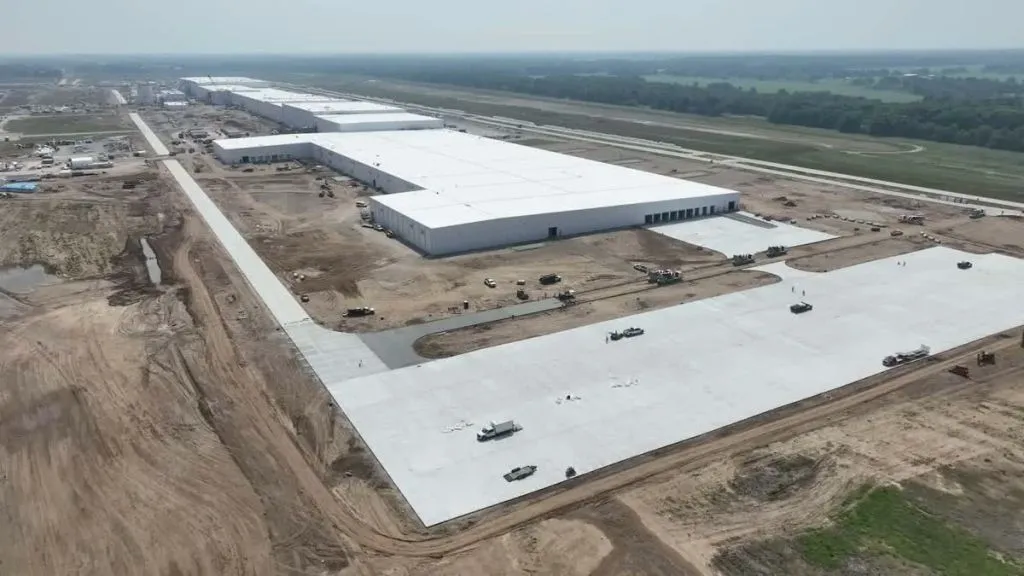
A joint Ford-CATL battery plant underscores the critical dependence of global automakers on China's advanced electric vehicle supply chain, a dynamic highlighted during high-level diplomatic exchanges.
The strategic significance of this partnership becomes increasingly apparent as major international manufacturers integrate Chinese technology into their core operations. The facility exemplifies how Western automotive giants are actively embedding themselves within the sophisticated ecosystem developed by Chinese battery leaders like Contemporary Amperex Technology Co. Limited (CATL).
This integration signals more than a simple sourcing agreement; it represents a deep structural alignment in the global transition toward electric mobility, positioning China not merely as a market but as an indispensable technological hub for the entire automotive sector.
The Strategic Imperative of Chinese Battery Dominance
The establishment and operation of this combined manufacturing site serve as tangible evidence of the power asymmetry developing within the EV industry. CATL maintains a commanding position in the global battery market, controlling significant production capacity and technological advancements that competitors struggle to match.
For automakers like Ford, navigating the shift away from internal combustion engines necessitates access to reliable, high-performance, and cost-effective battery solutions. Partnering with CATL allows these companies to bypass the protracted and resource-intensive process of developing cutting-edge battery technology entirely in-house or through less mature regional suppliers.
Analysts view this trend as a reflection of China's successful industrial policy execution, which has fostered massive scale and rapid innovation within its domestic high-tech manufacturing base. The sheer volume and technological sophistication offered by Chinese firms present an economic moat that many international competitors find difficult to breach without substantial capital investment.
The discussions surrounding the Xi-Trump summit provided a backdrop against this ongoing industrial reality, where geopolitical tensions often coexist with necessary commercial interdependence. While trade disputes persist, the practical demands of electrification compel major players to collaborate directly with Chinese technological powerhouses.
Navigating Global Supply Chain Vulnerabilities
The reliance on these specialized manufacturing partnerships inherently introduces supply chain considerations that global firms must actively manage. Any disruption within China’s battery production network has immediate and material consequences for assembly lines in North America or Europe, demonstrating the fragility of decentralized auto production.
This dependency forces multinational corporations to adopt a dual strategy: securing deep operational relationships with Chinese leaders while simultaneously attempting to build resilient, localized supply chains as a hedge against geopolitical volatility. The Ford-CATL venture represents the successful execution of the former.
Furthermore, the technology transfer implicit in these joint ventures is crucial. By co-locating production and sharing development insights, global automakers gain valuable operational knowledge regarding battery chemistry scaling, pack integration efficiency, and manufacturing automation processes unique to CATL's expertise.
Ultimately, this automotive collaboration crystallizes a broader economic narrative: while political rhetoric emphasizes decoupling, the physical requirements of modern technological industries like EV production necessitate deep, functional entanglement with China’s established industrial might. For global carmakers, accessing Chinese prowess is no longer an option but a prerequisite for maintaining competitive relevance in the electrified era.