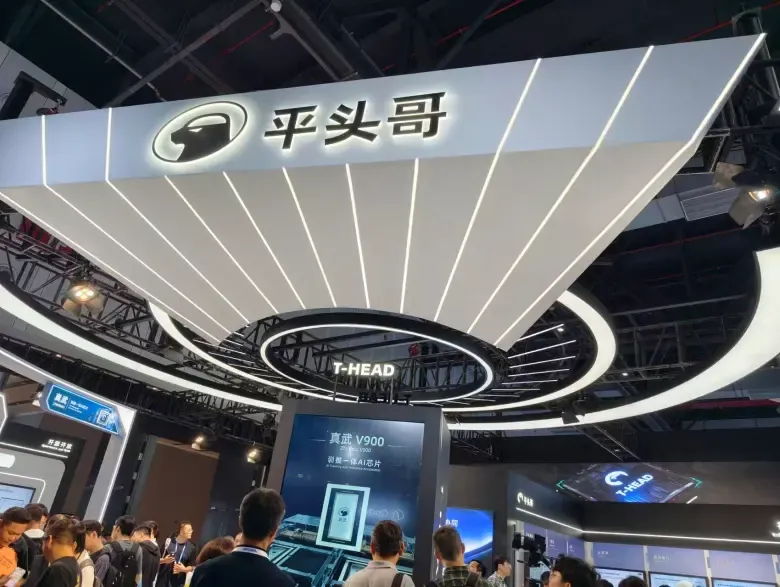
Guangzhou has introduced a new AI-powered scenario trading platform, deploying its inaugural batch of 49 real-world scenario orders to test market viability.
The launch signals a significant technological advancement for financial modeling within the region, moving beyond theoretical simulations toward practical, data-driven risk assessment. This platform uses artificial intelligence to generate and process complex trading scenarios that simulate actual market conditions, providing institutions with advanced predictive capabilities.
According to reports from The China Technology Review, this initiative represents a strategic move by local financial technology developers to integrate sophisticated machine learning into core trading infrastructure. The introduction of specific scenario orders suggests a targeted validation phase, where the system's against known market variables will be evaluated.
The platform’s architecture is designed not merely for testing but for proactive identification of potential systemic vulnerabilities or arbitrage opportunities before they manifest widely in live trading environments. By simulating diverse geopolitical events, economic shifts, and sudden liquidity changes, the AI can stress-test portfolios under conditions that are too rare or complex for traditional statistical models to adequately cover.
This aligns with broader national strategies emphasizing digital transformation within critical financial sectors. The emphasis is shifting from high-frequency execution alone to deep, intelligent scenario planning that informs trading strategy at a higher, more strategic level.
Platform Functionality and Strategic Implications
Experts observing the rollout suggest that the primary value proposition lies in reducing decision latency during periods of high uncertainty. Instead of reacting to a crisis after it occurs, firms utilizing this technology aim to pre-calculate optimal defensive or offensive maneuvers based on AI projections of potential states. This shift from reactive trading to predictive risk mitigation is fundamentally altering operational paradigmsp>
The technical implementation involves complex neural network architectures trained specifically financial time series data. The platform's ability to generate novel, non-vious scenarios—those not directly derivable from simple historical extrapolation—is a key differentiator highlighted by industry analysts monitoring the Guangzhou launch. This capability moves the tool into the realm of genuine foresight assistance rather than mere pattern recognition.
Furthermore, the deployment suggests growing regulatory acceptance and institutional readiness for AI tools in China’s financial ecosystem. Successful stress-testing against these real-world scenarios provides a quantifiable measure of the system' robustness, which is crucial for gaining widespread adoption among conservative banking and asset management entities.