BEIJING — Moonshot AI, the Chinese developer behind the Kimi large language model, has raised about $2 billion in new financing at a valuation of $20 billion, marking one of the largest recent funding rounds for a Chinese artificial intelligence startup as investor demand grows for lower-cost, open-weight AI systems.
The Beijing-based company’s latest round was led by Long-Z Investments, the venture capital arm of Chinese food delivery group Meituan, according to TechCrunch. Other participants included Tsinghua Capital, China Mobile and CPE Yuanfeng, according to the report.
The financing underscores the speed at which China’s leading AI companies are attracting capital despite U.S. export controls on advanced chips and a more difficult fundraising environment than that faced by many U.S. peers. Moonshot has become one of China’s most closely watched AI startups, helped by rising usage of its Kimi assistant and developer interest in its large language models.
Moonshot AI was founded in 2023 by Yang Zhilin, a former researcher at Meta AI and Google Brain. The company became widely known in China for Kimi, an AI assistant and family of large language models that compete with products from OpenAI, Google, Anthropic and several Chinese rivals. Its backers have included Alibaba, Tencent, HongShan, ZhenFund, IDG Capital and 5Y Capital.
Kimi’s appeal has grown as developers and businesses look for models that are cheaper to run and easier to adapt than closed systems. The company’s open-weight Kimi models allow users to inspect and deploy model weights under specified terms, a structure that has become central to competition among Chinese AI labs seeking global developer adoption.
China’s open-weight AI race accelerates
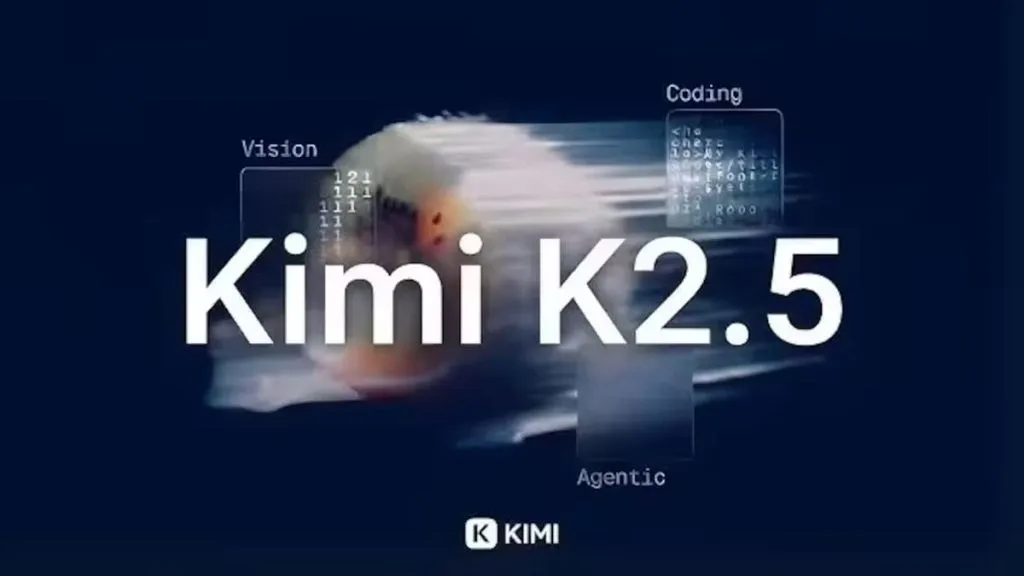
Moonshot’s latest model, Kimi K2.6, has become one of the most-used large language models on OpenRouter, according to TechCrunch. Earlier Kimi models gained attention from programmers after posting strong results on coding benchmarks and drawing comparisons with leading U.S. models from OpenAI and Anthropic.
Annual recurring revenue at Moonshot topped $200 million in April, driven by paid subscriptions and application programming interface usage, according to Tech Funding News. The figure suggests that Chinese AI firms are beginning to convert model popularity into commercial revenue, even as the sector remains capital intensive because of spending on computing infrastructure, engineering talent and model training.
The new valuation places Moonshot among China’s most valuable private AI companies. Tech Funding News described the company as China’s top-funded large language model startup following the round. The deal also reflects a broader reassessment of Chinese AI companies after the international rise of DeepSeek and continued investor interest in models that can deliver competitive performance at lower inference costs.
Competition remains intense. Moonshot faces Chinese rivals including DeepSeek, Alibaba’s Qwen, ByteDance’s Doubao, Zhipu’s Z.ai and MiniMax, while also competing indirectly with global platforms such as ChatGPT, Gemini and Claude. Some rivals have already tapped public markets or are weighing new funding rounds, increasing pressure on Moonshot to demonstrate both technical progress and commercial durability.
The funding arrives as China’s AI industry attempts to build a full domestic ecosystem around foundational models, cloud services and enterprise software. While U.S. companies still dominate the highest end of AI infrastructure and commercial deployment, Chinese firms are increasingly positioning open-weight models as a practical alternative for developers that prioritize cost, flexibility and local availability.
For Moonshot, the $20 billion valuation raises expectations that Kimi can become more than a popular chatbot. Investors are betting that the company can turn developer adoption into durable revenue from subscriptions, enterprise customers and API usage, while maintaining enough model performance to stay competitive in a fast-moving global market.