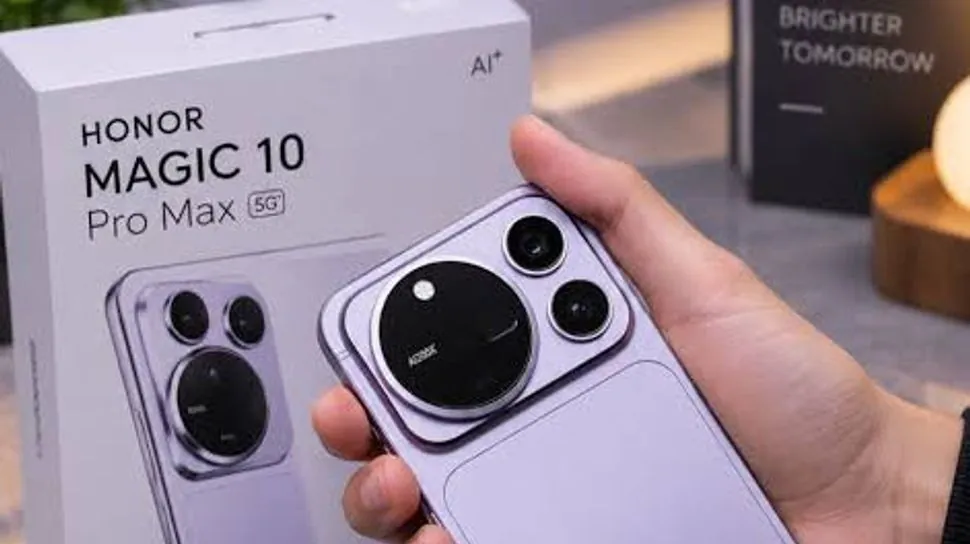
Honor is launching the Magic 10, featuring a groundbreaking 200MP LOFIC camera system paired with a tandem OLED display, signaling a significant leap in flagship mobile hardware capabilities.
This latest iteration from the Chinese manufacturer aims to redefine high-end smartphone expectations, pushing boundaries in both photographic resolution and display technology integration. The combination of ultra-high pixel density and advanced sensor technology positions the Magic 10 directly against established industry titans.
The introduction of LOFIC (Light-On-Focus-Integrated Camera) suggests a novel approach to image capture, moving beyond simple megapixel counts to integrate advanced focusing mechanisms directly into the sensor architecture. This immediate shift in hardware focus underscores Honor's aggressive strategy to capture market share in the premium segment.
Technical Specifications and Display Architecture
Central to the Magic 10's appeal is its dual-layer display, classified as tandem OLED. This architecture allows for superior color depth, contrast ratios, and brightness management compared to conventional single-layer panels. The tandem design facilitates layering different display elements to enhance visual fidelity across diverse usage scenarios.
The camera array is headlined by the 200MP LOFIC sensor. While the specific sensor manufacturer has not been finalized in all reports, the adoption of LOFIC technology implies a substantial upgrade in computational photography capabilities, promising exceptional detail retention even in challenging low-light environments. This camera overhaul is not merely an incremental update but a foundational redesign of the imaging pipeline.
Beyond the primary hardware, the device is expected to integrate cutting-edge chipset technology, balancing raw processing power with thermal efficiency—a critical requirement for sustained high-performance operation. The software experience is anticipated to leverage Honor's proprietary MagicOS, optimized specifically to harness the power of the tandem OLED and the advanced camera processing unit.
Market Positioning and Industry Implications
The emphasis on proprietary, high-specification components like the tandem OLED and LOFIC camera reflects a broader trend in the global smartphone market: the move away from generic component integration toward vertically integrated technological showcases. Manufacturers are using these unique features as primary differentiators.
Geopolitically, the continued aggressive rollout of devices like the Magic 10 by Chinese OEMs demonstrates their sustained investment in technological parity with, and in some areas, outperformance of, established Western and Korean rivals. This competitive drive intensifies the R&D arms race among global tech leaders.
For consumers, the implication is a rapid acceleration of expected mobile capabilities. The Magic 10 serves as a barometer, setting a new benchmark for what constitutes a "flagship" device. Market acceptance will depend on whether these advanced specifications translate into a superior, real-world user experience that justifies the premium pricing inherent in such hardware innovation.