🎙 Listen to a summary of this story
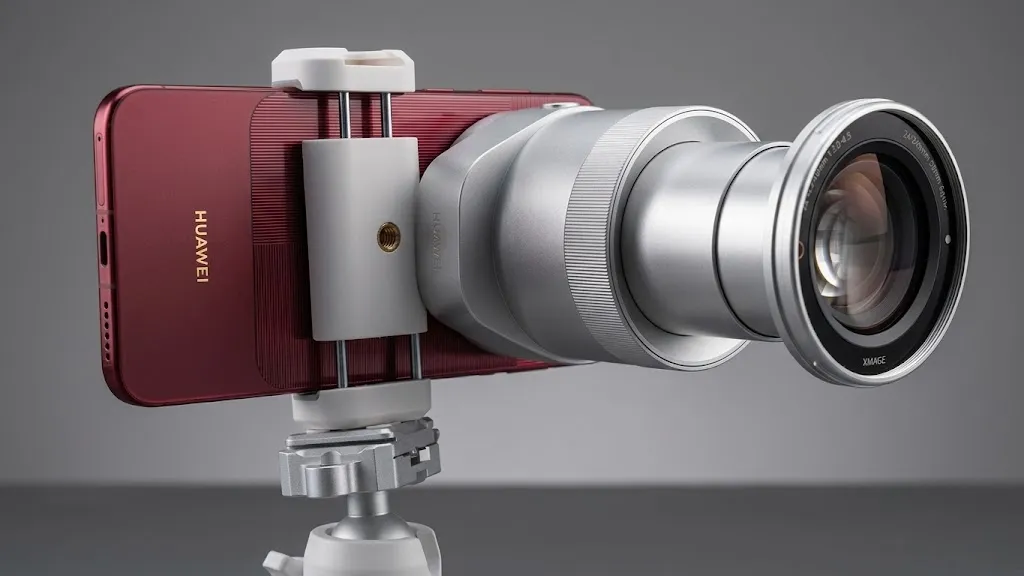
Huawei asserts its Mate 90 Pro Max teleconverter possesses imaging capabilities potentially surpassing dedicated DSLR cameras, signaling a significant advancement in mobile computational photography. This claim positions the flagship smartphone not merely as a communication device but as a sophisticated, portable imaging instrument capable of challenging established photographic hardware.
The integration of advanced optics and proprietary software algorithms allows the Mate 90 Pro Max to achieve levels of optical and digital performance previously reserved for larger, more complex camera systems. This technological leap addresses the long-standing trade-off between mobile convenience and professional-grade image fidelity in consumer devices.
Huawei’s development underscores a strategic pivot toward embedding high-end imaging technology directly into premium smartphone platforms, compelling competitors to accelerate their own investments in sensor miniaturization and AI-driven image processing pipelines to remain relevant in the saturated flagship market segment.
Technical Superiority and Imaging Architecture
The core of this claimed superiority lies within the intricate interplay between the Mate 90 Pro Max's specialized teleconverter hardware and Huawei’s sophisticated imaging engine. While specific lens element counts were not detailed, the system reportedly leverages advanced optical stabilization and computational photography techniques to manage depth, focus acquisition, and noise reduction in ways that mimic professional mirrorless setups.
This architecture suggests a move beyond simple megapixel counts; performance is now defined by how effectively the phone’s software interprets raw sensor data. The teleconverter functions not just as an optical magnifier but as a highly integrated processing node, allowing for exceptional zoom fidelity without the severe degradation typically associated with digital cropping or basic optical magnification.
The commercial implication of this technical prowess is clear: Huawei aims to redefine the value proposition of the ultra-premium smartphone. Consumers are increasingly willing to pay a substantial premium not just for processor speed, but for integrated creative tools that reduce the need to carry ancillary photographic equipment.
Broader Market Implications
This aggressive push into imaging supremacy reflects Huawei's broader strategy of establishing technological self-sufficiency in critical hardware domains. By demonstrating capability parity—or superiority—to traditional dedicated cameras, the company strengthens its narrative regarding indigenous innovation against global supply chain dependencies.
In a competitive landscape where camera performance is often the primary differentiator between flagship models, this development forces rivals to reassess their own R&D roadmaps. If mobile imaging can effectively bridge the gap with DSLRs, the market penetration potential for high-end smartphones expands significantly into enthusiast and semi-professional user bases.
Ultimately, the Mate 90 Pro Max teleconverter acts as a barometer for the future of mobile technology convergence. It suggests that the boundary between 'phone' and 'camera system' is becoming increasingly porous, moving toward a unified platform where sophisticated computing powers miniaturized optics to achieve macro-level results.