
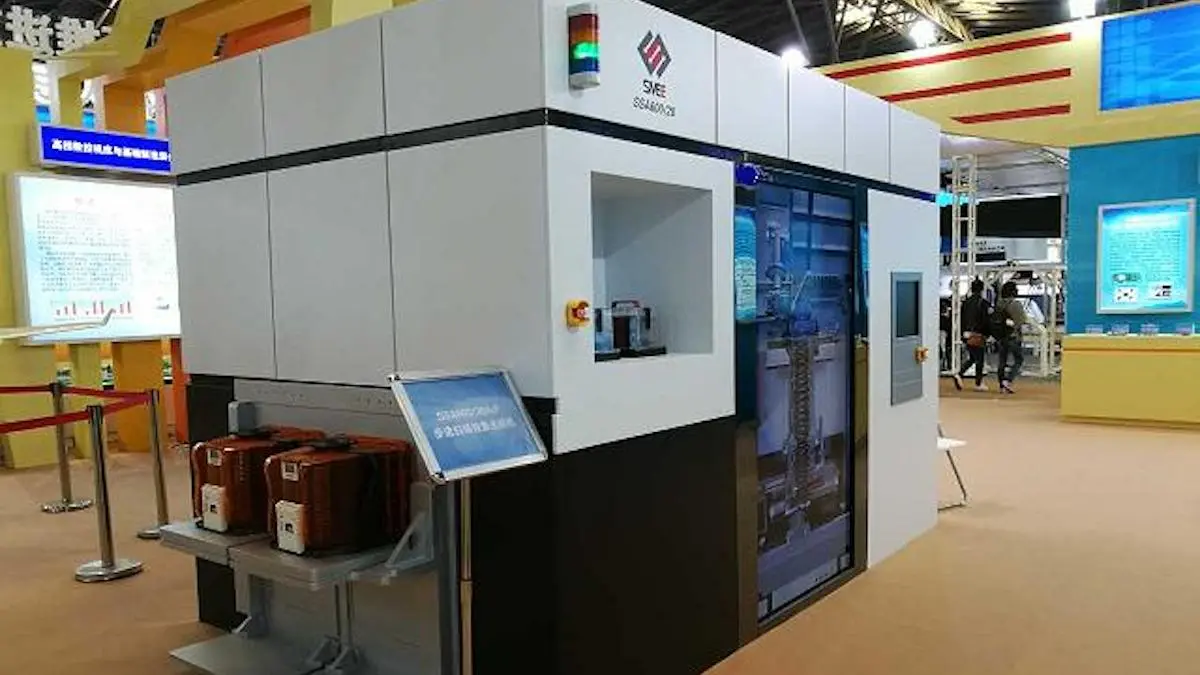
SMEE unveiled its advanced dry lithography platform model at the China International Import Expo (CIIE), signaling a strategic push into high-precision semiconductor manufacturing equipment within the critical Chinese market.
The debut of this platform highlights SMEE’s continued investment in next-generation lithography technology, positioning the company as a key domestic competitor in the highly specialized field of wafer patterning. The exhibition served as a crucial platform to demonstrate the technological robustness of their machinery to both domestic manufacturers and international industry observers.
This hardware presentation is not merely a product showcase; it represents SMEE's concerted effort to meet the escalating domestic demand for sophisticated, domestically sourced semiconductor tools, mitigating reliance on established international suppliers.
Technical Capabilities and Market Positioning
The displayed platform is engineered to handle complex patterning requirements, featuring capabilities tailored for various production lines. Specifically, the system supports I-Line and KrF (KrF excimer laser) processes, technologies vital for producing microelectronic components across diverse industrial applications.
SMEE emphasized the system's integrated design philosophy, which allows for streamlined integration into existing fabrication environments. The precision offered by the dry lithography method, as showcased, directly addresses the industry's need for higher resolution and tighter process control compared to older wet etching techniques.
Commercial dynamics surrounding this launch suggest SMEE is targeting mid-to-high-end domestic fabs looking to enhance their production yield and reduce operational costs associated with foreign dependency. The platform’s adaptability across different process nodes is a central pillar of its commercial offering.
Broader Industry and Geopolitical Implications
The prominence of this display at CIIE underscores the intensifying technological self-sufficiency drive across the Chinese technology sector. As global semiconductor supply chains face increasing geopolitical scrutiny, indigenous equipment development becomes a strategic national priority.
SMEE’s advancement in dry lithography contributes directly to this national objective by providing a viable, high-specification alternative to established foreign giants in the lithography space. This capability is fundamental to scaling up advanced domestic chip production capabilities.
Market analysts view this move as a significant inflection point. Success in scaling the deployment of such platforms will not only bolster SMEE’s revenue but will also accelerate the overall maturation of China’s semiconductor ecosystem. Further adoption will validate the viability of domestic alternatives in highly sensitive capital equipment markets, as detailed in the initial review.