Trump-Xi summit ends with promises, pageantry and unresolved technology tensions
BEIJING — President Donald Trump left China on Friday claiming progress in talks with President Xi Jinping, but the closely watched summit ended with few clear breakthroughs on the disputes most likely to define the next phase of U.S.-China relations: artificial intelligence, semiconductor chips, Taiwan, trade and the war in Iran.
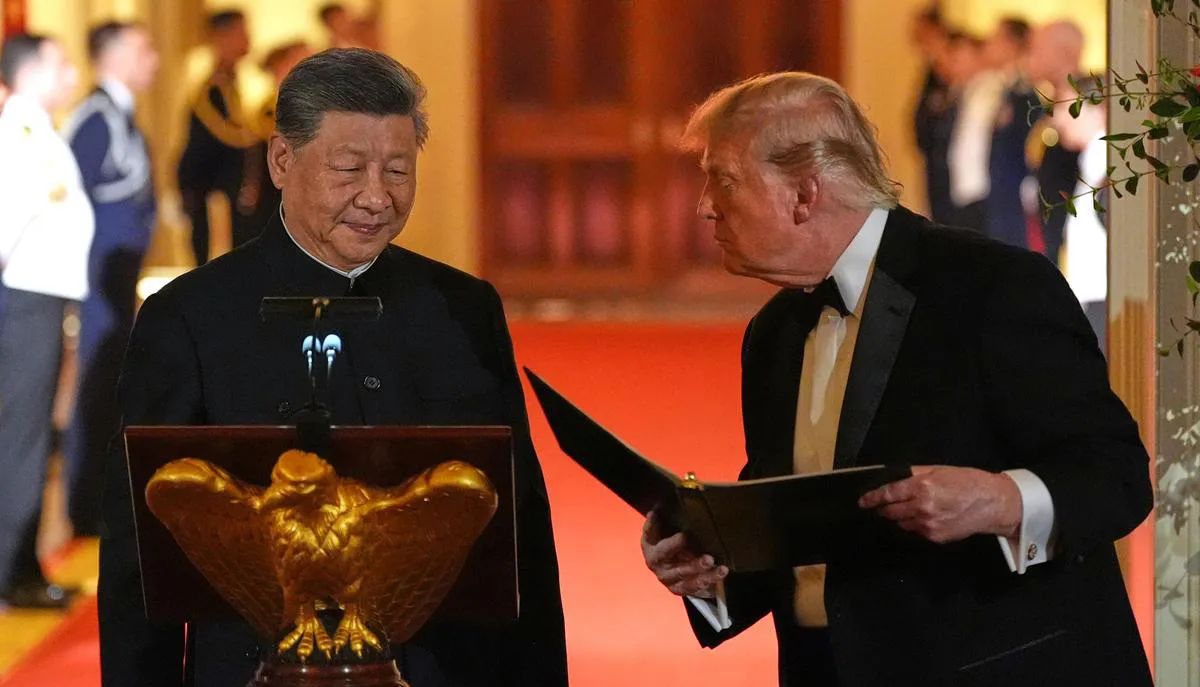
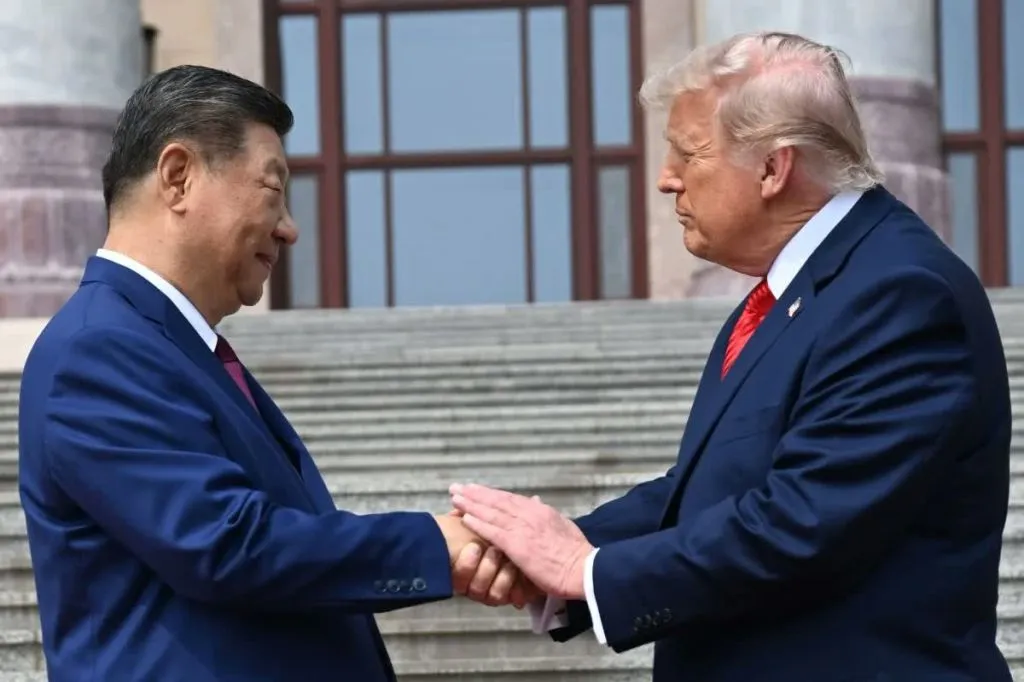
The two-day meeting, Trump’s first visit to China as president in nearly a decade by a U.S. leader, brought the familiar trappings of great-power diplomacy. There were banquets, carefully staged appearances and warm words from both leaders about stability between the world’s two largest economies. Trump said the two sides had “settled” many problems and pointed to what he described as major Chinese purchases of U.S. oil, soybeans and aircraft.
But details were limited, and Beijing did not immediately confirm the full scope of Trump’s claims. That left the summit looking less like a reset than a pause in a rivalry that now reaches far beyond tariffs and trade deficits.
The most important subject may have been the one least visibly resolved: artificial intelligence. Technology executives joined the U.S. delegation, including Nvidia Chief Executive Jensen Huang, Apple’s Tim Cook and Tesla’s Elon Musk. Their presence underscored how much the relationship has shifted from arguments over steel, farm goods and consumer products to a contest over computing power, chips, data and industrial control.
Testing the Lmits of Friendship
Washington has tried to limit China’s access to advanced semiconductors that can train and run powerful AI systems. Beijing has responded by accelerating support for domestic champions, including Huawei, and by urging Chinese firms to reduce reliance on American suppliers. Nvidia had hoped for progress on sales of its H200 chip to China, but no major chip agreement was announced.
The absence of a technology deal weighed on markets. Semiconductor shares fell after the summit ended without a clear path forward for advanced chip sales, a sign that investors had expected more from the meeting. The reaction showed how diplomacy between Washington and Beijing can move not only currencies and commodities, but also the companies at the center of the AI boom.
Trump sought more traditional deliverables. He emphasized possible Chinese purchases of U.S. farm products, energy and Boeing aircraft, the kinds of commitments that can be presented as wins for American workers and exporters. The talks also touched on fentanyl, market access and rare earth minerals, though officials offered few specifics.
Xi used the meeting to project China’s confidence and to press Beijing’s central concerns. He warned that Taiwan remained the most sensitive issue in the relationship and said mishandling it could lead to clashes. Trump said U.S. policy had not changed, but uncertainty remains over future arms sales to the self-governing island.
Tensions and Potential Obstacles
Taiwan is not only a security flashpoint. It is also the center of the world’s most advanced semiconductor manufacturing, making it inseparable from the AI race. Any crisis in the Taiwan Strait would threaten the chip supply chains that power everything from smartphones and electric vehicles to military systems and generative AI models.
Iran was another obstacle. Trump said he and Xi agreed that Tehran should not obtain a nuclear weapon and that the Strait of Hormuz should remain open. China buys large volumes of Iranian oil and has influence with Tehran, but Beijing showed little sign it would take on a public role as mediator. The issue also connects back to technology because AI infrastructure depends on vast amounts of energy, stable supply chains and predictable global shipping routes.
The summit did produce one clear result: both leaders showed they want to manage competition without allowing it to spiral into open confrontation. Trump gained a stage to promote commercial deals and personal diplomacy. Xi gained a demonstration that China can host the U.S. president as a peer while making no obvious concessions on core strategic issues.
Still, the hardest questions remain. Can the United States protect its lead in AI without cutting off business opportunities for its own companies? Can China build a self-sufficient chip industry fast enough to withstand export controls? Can the two governments create rules for AI safety, cyber risks and military use before a crisis forces the issue?
The future of U.S.-China relations may depend less on what was said in Beijing than on what happens next in laboratories, chip factories, data centers and legislatures. If the summit leads to working channels on AI and technology controls, it may be remembered as the start of a more managed rivalry. If not, it may be seen as a polished ceremony before a harder era, when the contest over chips, energy, Taiwan and artificial intelligence becomes the central struggle of global power.