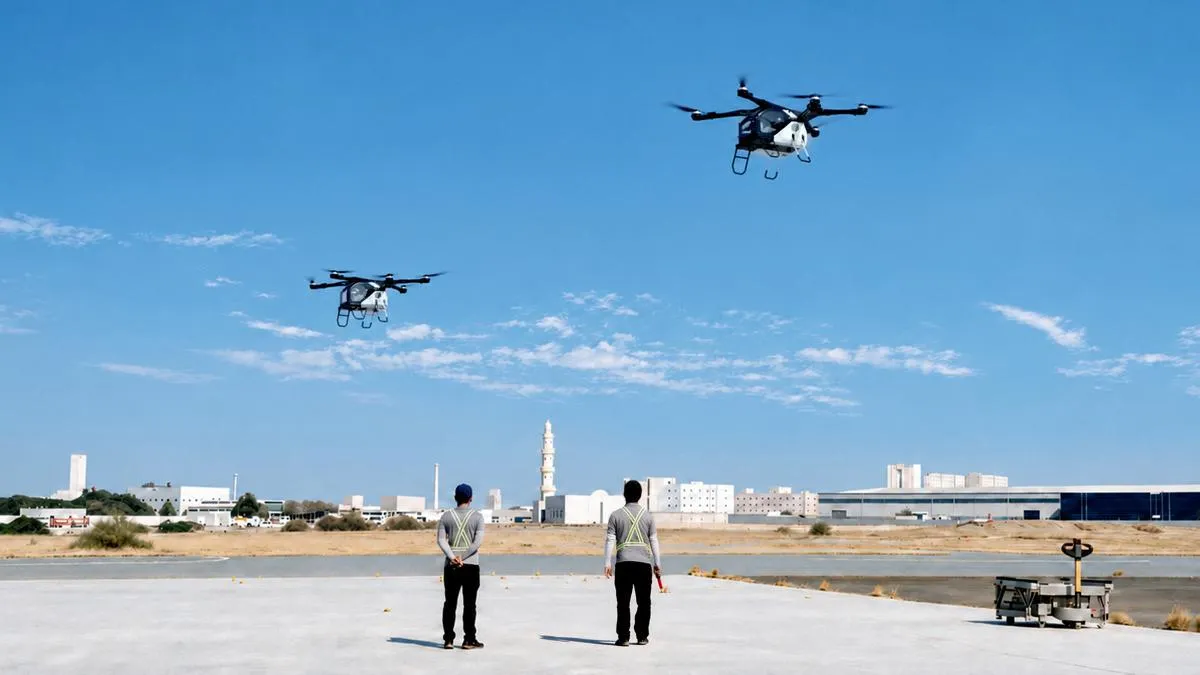
The United Arab Emirates has partnered with a major Chinese aerospace firm to accelerate its strategic flying car development program.
The collaboration signals a significant commitment from the UAE to establishing itself as a regional hub for advanced urban air mobility, leveraging expertise in next-generation aviation technology from its Chinese counterpart. This strategic alliance focuses on integrating cutting-edge Chinese manufacturing and research capabilities with the UAE's ambitious governmental vision for futuristic transportation infrastructure.
The partnership moves beyond simple investment; it involves joint research and development into the operational aspects of these electric vertical take-off and landing (eVTOL) vehicles. Sources confirm the initiative aims not only for prototype development but also for the creation of a fully regulated operational framework within the Emirates for these personal aerial vehicles.
This move aligns with global trends showing massive private and state sector investment pouring into sustainable air mobility solutions, positioning the UAE to capitalize on the burgeoning future of sky travel. The Chinese partner brings established experience in large-scale technological deployment, which is crucial for transitioning these concepts from laboratory models to viable commercial transport.
Strategic Implications for Regional Mobility
The establishment of this partnership underscores the growing synergy between Chinese industrial prowess and the Gulf nations' drive toward high-tech diversification. For the UAE, this project serves as a tangible demonstration of its commitment to post-oil economic pillars, specifically in advanced manufacturing and smart city planning.
The involvement of a Chinese entity provides the UAE access to a robust supply chain and a deep pool of engineering talent familiar with rapid technological iteration. The immediate focus areas identified in the partnership scope include battery efficiency, autonomous flight control systems, and noise reduction—factors critical for mass public acceptance of flying vehicles.
Authorities involved in the initiative have indicated that the initial phases will concentrate on controlled testing environments before scaling up to integrated urban routes. This phased approach mitigates regulatory risk while allowing for data collection on real-world performance metrics.
The broader geopolitical significance lies in the deepening technological exchange between the two nations. China is simultaneously expanding its global footprint in high-value manufacturing, while the UAE secures access to critical aerospace innovations needed to realize its long-term urban planning goals.
Future Trajectory and Market Penetration
Experts suggest that successful execution of this initial venture could position the UAE as an early adopter and regulatory leader in the MENA region for autonomous air taxis. The goal extends beyond mere piloting capability; it involves creating the entire ecosystem—from charging infrastructure to air traffic management software.
The partnership is expected to generate intellectual property jointly owned by both parties, which will be vital for future licensing and market penetration into neighboring Gulf states. This shared IP pool represents a significant competitive advantage in the rapidly evolving global eVTOL market.
The clinical assessment of the project indicates that the primary hurdle will transition from technological feasibility to regulatory harmonization across international borders. However, the foundational collaboration with a major Chinese player provides a powerful impetus toward overcoming these logistical challenges.
Ultimately, this alliance solidifies a pathway for the UAE to move from being a consumer of advanced technology to becoming a key innovator and operator within the global paradigm shift toward three-dimensional urban transit.