🎙 Listen to a summary of this story
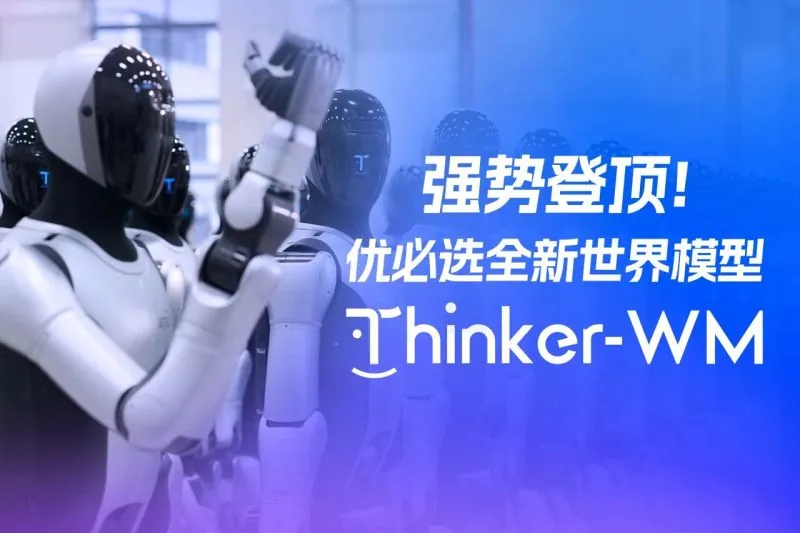
UBTECH has unveiled Thinker-WM, a novel world model designed to unify disparate modalities—video, depth perception, and robotic action—into a single cohesive framework. This integration represents a significant leap toward embodied AI capable of interpreting complex, real-world scenes and executing nuanced physical tasks autonomously.
The system’s architecture addresses one of the core challenges in robotics: bridging the gap between high-level visual understanding derived from large foundation models and low-level, precise motor control. By fusing sensory data streams into a unified world representation, Thinker-WM allows robots to reason about their environment holistically, moving beyond simple perception-action loops.
This development positions UBTECH competitively within the rapidly evolving landscape of general-purpose embodied AI, particularly as benchmarks like WorldOlympiaD and EWMBench demand increasingly sophisticated multimodal reasoning capabilities from autonomous agents.
Technical Architecture and Performance Benchmarks
Thinker-WM operates by creating a comprehensive internal representation of its environment that simultaneously encodes visual features (from RGB inputs), spatial geometry (from depth sensors), and the predicted consequences of various actions. This unified model facilitates causal reasoning—the ability to predict what will happen if a specific action is taken in a given state.
The system demonstrates robust performance across demanding evaluation suites. Its integration with benchmarks such as WorldOlympiaD confirms its capacity for complex, multi-step manipulation tasks that require both perception and planning. The underlying methodology allows the model to learn generalizable skills rather than rote memorization of specific task sequences.
Hardware compatibility is designed for practical deployment; while leveraging advanced computational backends necessary for large world models, the framework aims for deployability on sophisticated robotic platforms capable of handling continuous streams from multiple sensor modalities simultaneously. This focus moves the technology from purely simulated environments toward real-world operational viability.
Implications for Industrial Robotics and AI Adoption
The successful unification of perception and action within Thinker-WM signals a maturation point for robotics research, shifting the industry's focus from specialized task execution to generalized intelligence. Robots equipped with such models can transition from being sophisticated tools to becoming adaptable teammates in unstructured environments.
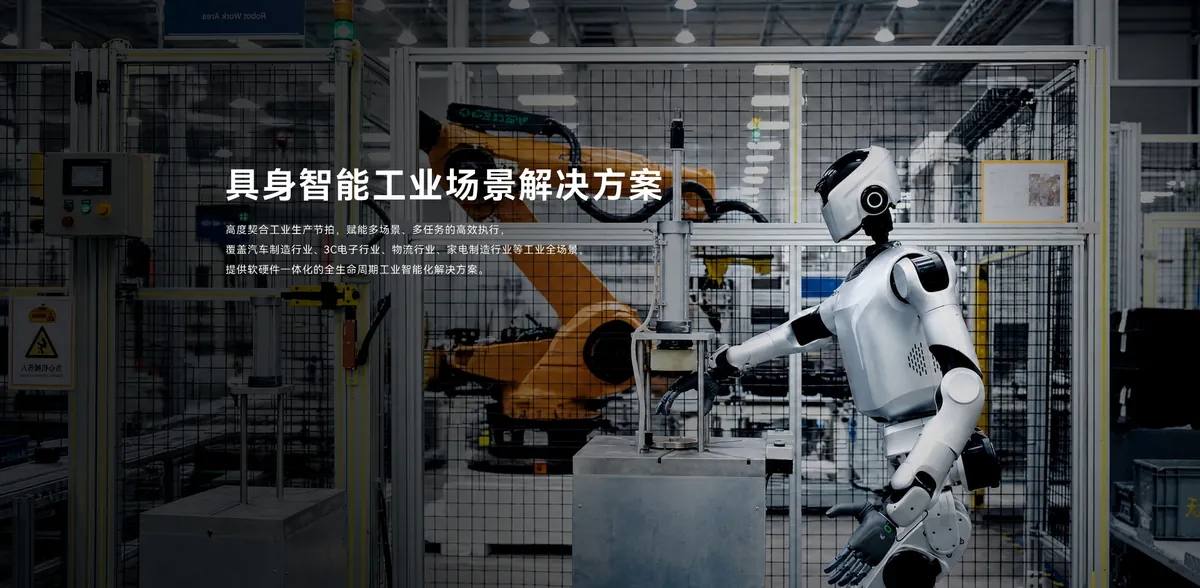
From an industrial standpoint, this capability lowers the barrier to entry for complex automation tasks currently requiring extensive human programming or highly tailored sensors. Imagine warehouse logistics where a robot doesn't just see boxes but understands their spatial relationships and the physics required to stack them safely based on visual cues.
Geopolitically, advancements like Thinker-WM underscore the intense race among major tech players in achieving true artificial general intelligence (AGI) embodied within physical systems. Companies demonstrating mastery over multimodal world modeling are establishing critical intellectual property advantages in the next generation of automated infrastructure and service robotics.