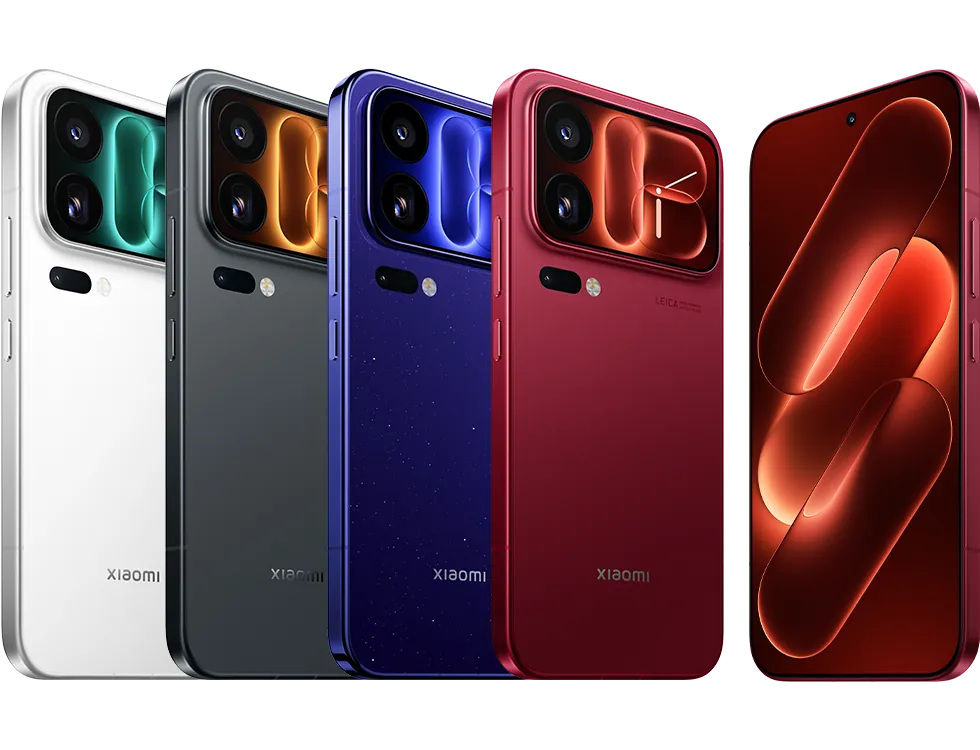
Xiaomi has globally deployed the 18 Pro and 18 Pro Max, introducing a significant software feature, Vibe-Code, which enables functional applications directly on the rear screen, signaling an aggressive push into modular user interaction.
This international rollout positions the devices to compete directly in premium segments against established flagships, leveraging advanced camera hardware and novel interface technology. The introduction of the 200MP primary sensor on both models is central to this competitive positioning, promising high-fidelity imaging capabilities across diverse user scenarios.
The global availability marks a strategic expansion for Xiaomi, moving beyond regional launches to establish broader market penetration in key international territories. The integration of the Vibe-Code system suggests a fundamental shift in how users expect smartphone hardware to interact with software layers beyond the primary display.
Technical Specifications and Hardware Architecture
Technically, the 18 Pro and 18 Pro Max are engineered around high-end components designed for intensive performance. The defining hardware feature is the high-resolution 200MP camera system, which is complemented by advanced computational photography algorithms to ensure consistency and quality across varied lighting conditions.
Beyond the optics, the devices integrate sophisticated chipset architecture, providing the necessary processing power to manage the demands of the new rear-screen application framework. The global variants are expected to carry regionally optimized configurations, though the core hardware stack remains uniformly potent.
The Vibe-Code implementation utilizes the rear display not merely for notifications, but as a genuine interactive plane. This capability allows users to execute lightweight applications—such as quick communication or utility functions—without interrupting the primary screen experience, redefining peripheral device utility.
Market Dynamics and Industry Implications
The global launch of the 18 Pro series reflects Xiaomi’s calculated strategy to disrupt the premium smartphone market through feature differentiation rather than solely relying on price parity. The Vibe-Code feature acts as a significant technological wedge against competitors whose interface paradigms remain largely tethered to the frontal display.
From a broader industry perspective, this focus on utilizing previously dormant hardware surfaces signals a maturation of mobile OS design. Manufacturers are actively seeking novel ways to increase the usable surface area of the device, moving past incremental improvements in screen size or refresh rates.
Geopolitically, the successful global deployment reinforces Xiaomi’s growing operational footprint outside of China. By offering cutting-edge, integrated features like the 200MP camera paired with novel software interaction, the company solidifies its status as a formidable, globally ambitious technology player.