🎙 Listen to a summary of this story
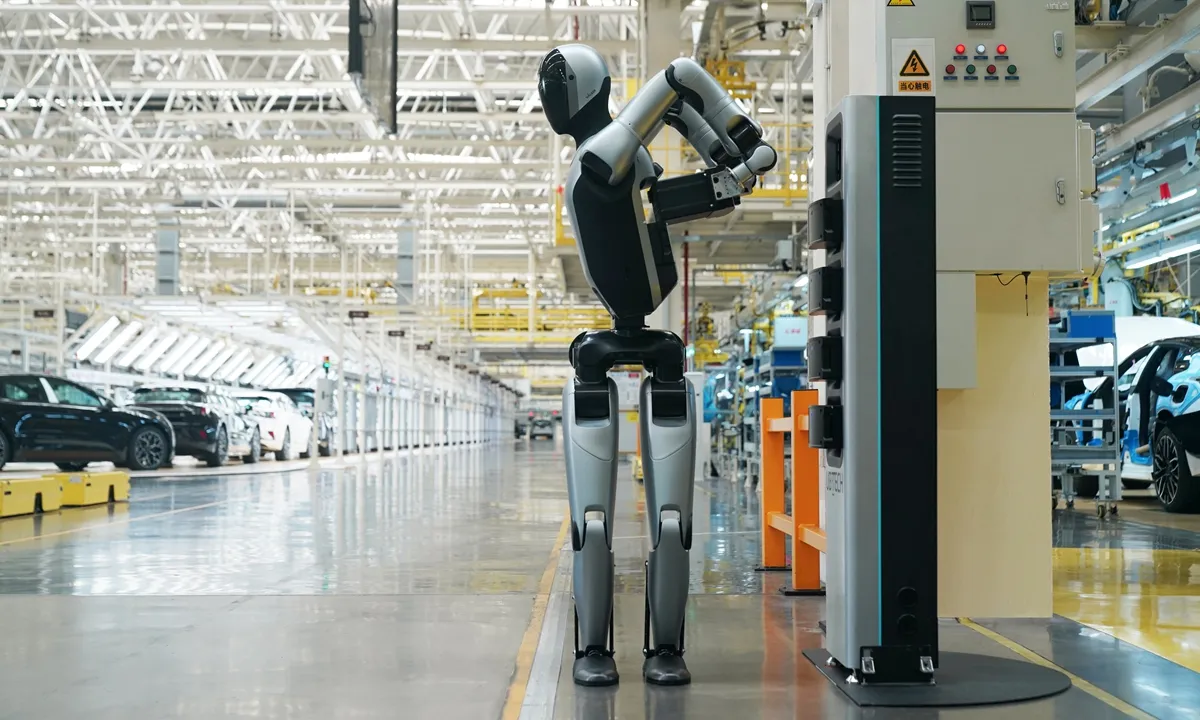
Xpeng is positioning itself as a serious challenger to Tesla in the embodied AI sector after securing a US$900 million investment for its advanced robotics unit.
The substantial capital injection signals a significant strategic pivot by Xpeng, aiming to leverage autonomous driving technology into tangible, real-world robotic applications that mimic human interaction and decision-making capabilities.
This funding validates the company's intensive focus on moving beyond traditional automotive software toward complex embodied intelligence, where AI systems operate within a physical environment.
Strategic Investment in Embodied AI
The US$900 million investment underscores the escalating competition between major tech players regarding the practical application of artificial general intelligence (AGI) outside purely digital domains. Xpeng's ambition is to deploy sophisticated robotic units capable of navigating and interacting with dynamic, unstructured environments.
This venture places Xpeng directly in the crosshairs of Tesla’s advanced robotics initiatives, particularly its Optimus humanoid robot project, creating a high-stakes technological race for dominance in applied AI.
The technology underpinning this new unit represents an evolution from current autonomous driving stacks; it requires real-time perception, complex motor control, and decision-making under uncertainty—the core tenets of embodied AI.
Analysts suggest that success in this area will determine which companies can successfully bridge the gap between impressive simulation performance and reliable deployment in commercial settings.
By focusing on robotics, Xpeng is not merely improving its vehicle’s driver assistance systems; it is establishing an entirely new hardware-software ecosystem built around intelligent agents.
The financial backing allows the company to scale development rapidly, hire specialized talent in areas like dexterous manipulation and sensor fusion, and accelerate prototype testing against real-world industrial and domestic challenges.
Implications for the EV and Robotics Landscape
This move by Xpeng broadens the scope of what consumers and enterprise clients expect from advanced electric vehicles. The vehicle becomes less a mode of transport and more an integrated platform capable of interfacing with surrounding intelligent systems.
If Xpeng successfully commercializes its embodied AI unit, it could unlock entirely new revenue streams beyond vehicle sales, potentially encompassing logistics, manufacturing assistance, and service industries.
The competitive dynamic shifts from pure battery efficiency and charging speed to the sophistication of the underlying intelligence. Tesla has long dominated the software narrative in EVs; Xpeng is now aggressively attacking the hardware-intelligence interface.
Market observers point out that while both companies possess deep engineering capabilities, their differing approaches—Tesla often emphasizing vertical integration from chip to cloud, and Xpeng focusing on highly adaptable, specialized robotic interaction—will define their respective market penetration strategies.
The race is no longer simply about who has the best self-driving software; it is about which company can successfully imbue machines with generalized intelligence capable of operating across diverse, unpredictable physical tasks.