🎙 Listen to a summary of this story
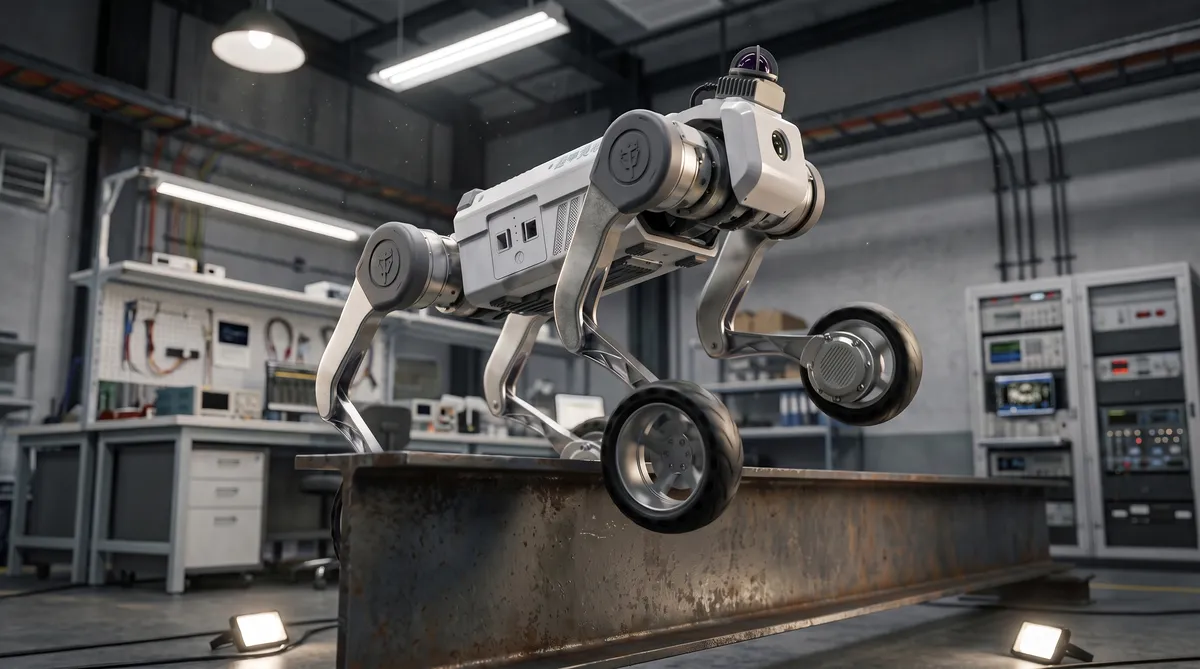
Shenzhen startup Yuejia Lingdong is deploying advanced quadruped robots within metro environments, targeting a massive production capacity of 10,000 units by the end of 2026.
This deployment signals a significant pivot for autonomous robotics, moving sophisticated mechanical systems from controlled industrial settings into the complex, high-traffic infrastructure of urban public transit systems. The company’s initiative addresses the increasing need for automated monitoring, inspection, and logistical support within dense metropolitan networks.
Yuejia positions these four-legged robots as essential tools for maintaining operational integrity inside subway tunnels and stations. The integration of these machines represents a shift toward utilizing biologically inspired locomotion to navigate environments that present unique challenges for traditional wheeled or tracked automation.
The strategic significance of this move extends beyond mere automation; it involves establishing a new category of infrastructure maintenance hardware. By proving reliability in the dynamic and often constrained space of a metro system, Yuejia aims to validate the commercial viability of advanced quadruped platforms for public sector adoption globally.
Metro Deployment and Operational Scope
The robots are engineered specifically to handle the variable terrain and structural intricacies found within subterranean rail networks. Their quadrupedal design allows for superior stability across uneven trackbeds, debris-covered surfaces, and tight turning radii, capabilities often prohibitive for standard robotic platforms.
Operational functions are slated to encompass routine structural inspections, environmental monitoring—such as tracking air quality or detecting leaks—and potentially assisting in light logistical tasks. This multi-faceted utility allows transit authorities to reduce reliance on manual, often hazardous, human inspections.
The company’s focus on the metro sector indicates a clear understanding of high-stakes, critical infrastructure needs. Success in this regulated environment provides a powerful benchmark for expanding the technology into other complex utility sectors, including power grid inspection and large-scale warehouse management.
Scaling Production and Market Trajectory
Achieving a 10,000-unit production capacity is central to Yuejia Dynamics' near-term business strategy. This aggressive scaling targets market penetration necessary to secure long-term contracts with major municipal transit operators both domestically and internationally.
The development process emphasizes robust, industrial-grade durability alongside operational autonomy. The platform integrates advanced sensor suites and proprietary navigation algorithms, ensuring the robots can operate independently while adhering to strict safety protocols mandated by railway governing bodies.
For industry observers, the Yuejia Dynamics effort underscores a maturing trend in robotics, where specialized, agile hardware is moving out of research labs and into core operational roles. Interested parties can follow the company’s progress via its official channels, detailed further in reports like this review of their deployment plans.