
🎙 Listen to a summary of this story
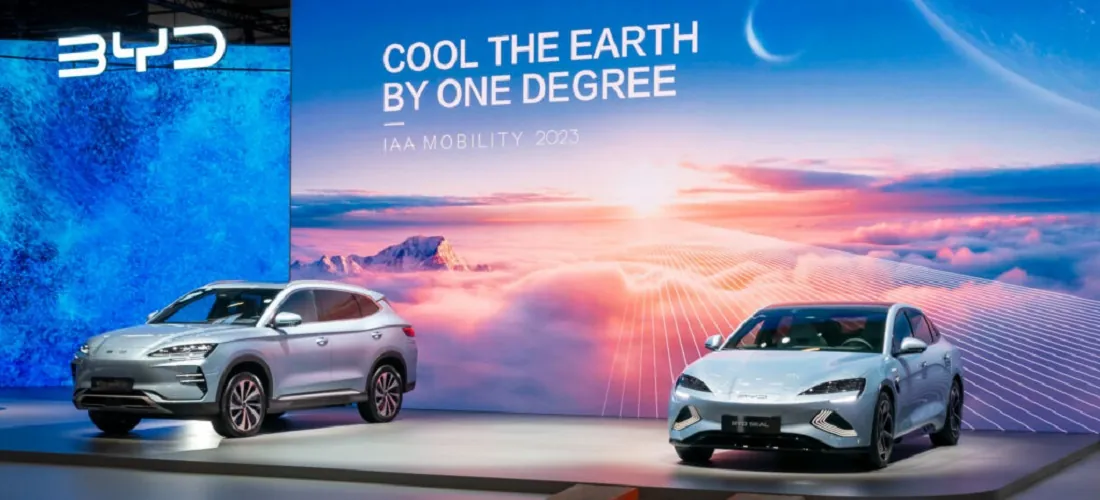
BYD reported a substantial second-quarter profit of US$1.2 billion, driven by accelerating global demand for its electric vehicles and robust expansion across international markets.
The Chinese electric vehicle giant demonstrated significant upward momentum in its financial performance, underscoring the accelerating global transition away from internal combustion engines. This profitability surge reflects not only strong domestic sales in China but also the successful penetration into key international territories where EV adoption rates are rapidly increasing.
The company’s financial disclosures for the quarter highlighted the successful leveraging of its integrated supply chain, a strategic advantage that allows BYD to manage production costs effectively even amid volatile global commodity prices. Analysts noted that this margin expansion signals a maturation of BYD’s production capabilities and its ability to compete aggressively on both price and technology.
While the headline profit figure is significant, the strategic importance lies in the sustained growth trajectory. BYD continues to expand its production capacity aggressively, positioning itself not merely as a domestic market leader but as a formidable global contender against established automotive manufacturers. The demand surge noted in the report is indicative of a broader, irreversible shift in consumer preference toward electrified mobility worldwide.
Global Market Penetration and Operational Scale
The company's recent performance is inextricably linked to its aggressive internationalization strategy. BYD has been actively establishing sales and service networks across several continents, moving beyond its traditional stronghold in the People's Republic of China. This expansion mitigates reliance on the domestic market, diversifying risk while capturing high-growth international consumer bases.
Specific operational metrics detailed in the review suggest that the company is successfully navigating complex regulatory environments in foreign markets. The ability to scale production while maintaining quality standards across diverse geographical locations represents a major operational hurdle that BYD appears to be overcoming with notable success. The integration of battery technology, a core competency for the firm, remains central to its competitive edge.
Furthermore, the profitability is supported by the company’s diversification beyond passenger vehicles. While passenger EVs remain the primary driver of revenue, the growth in its commercial vehicle segments provides a stable and high-volume foundation for ongoing financial health. This comprehensive product portfolio allows BYD to address varied consumer needs, from personal commuting to enterprise logistics.
Future Outlook and Competitive Positioning
Looking forward, the market anticipates that BYD will continue to face intense competition, particularly from other Chinese EV manufacturers and legacy automakers initiating their electrification pivots. The sustained profitability of the second quarter provides the necessary capital reserves for continued investment in research and development, particularly in next-generation battery technology and autonomous driving features.
The sustained global demand suggests that the EV market is entering a phase of hyper-growth, moving past the initial adopter phase into broader mass-market acceptance. BYD is strategically positioned to capitalize on this transition, leveraging its vertical integration—controlling everything from raw material sourcing to final assembly.
Investors and industry observers are closely monitoring the company’s ability to maintain this growth rate while navigating geopolitical trade headwinds. The company's successful navigation of these external pressures will be crucial in translating short-term quarterly gains into long-term, dominant global market share.