🎙 Listen to a summary of this story
China’s factories returned to growth in September, powered in part by surging demand for the equipment behind the global artificial intelligence boom. But the recovery also exposed a widening divide between high-technology producers and the smaller manufacturers still struggling with weak orders, falling employment and subdued domestic consumption.
China’s official manufacturing purchasing managers’ index rose to 50.1 in September from 49.8 in August, according to the National Bureau of Statistics. A reading above 50 indicates expansion, while one below it points to contraction. The increase ended two consecutive months of declining factory activity.
The improvement was modest but significant. The production index climbed 1.3 points to 51.7, showing that factories were increasing output. A separate private-sector survey reported by Reuters showed an even stronger expansion, with its manufacturing index reaching a five-month high of 52.1.
Behind those headline figures lies a larger industrial transformation. Artificial intelligence is affecting Chinese factories in two ways: by creating demand for chips, servers, power equipment and communications hardware, and by changing how goods are designed, assembled and inspected.
AI demand energizes high-tech production
High-technology manufacturing recorded a purchasing managers’ index of 52.5 in September, substantially above the national manufacturing average. Equipment manufacturing also expanded, registering 51.0, according to the statistics agency’s analysis of the September survey.
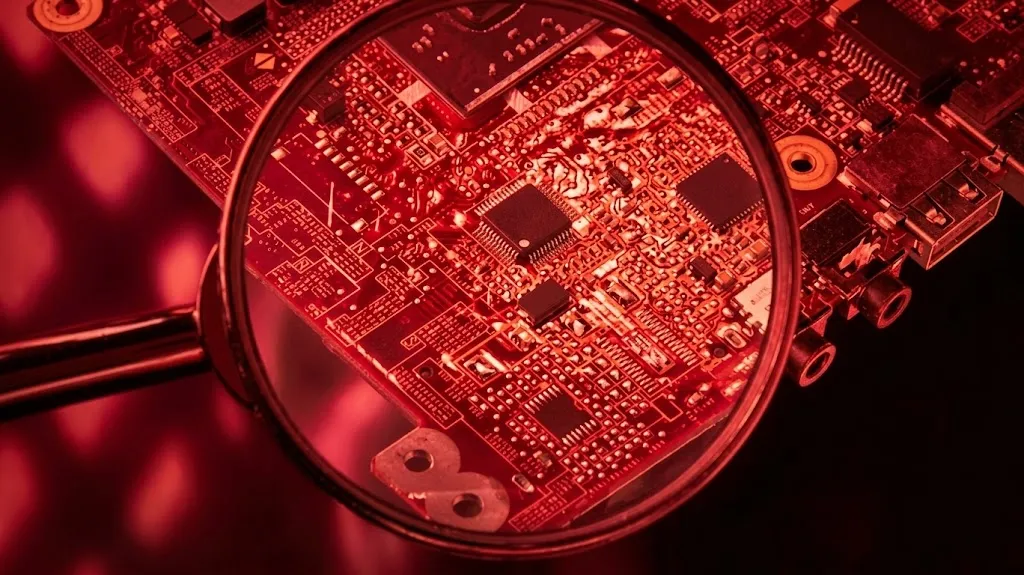
The figures suggest that spending on AI infrastructure is spreading beyond software companies. Training and operating advanced models requires vast data centers packed with semiconductors, memory chips, cooling systems, networking equipment and electrical hardware. The result is new business for factories occupying almost every stage of the technology supply chain.
Earlier official data showed the scale of the shift. In June, the output of China’s high-technology manufacturers rose 14.1% from a year earlier, compared with a 6% increase for manufacturing overall. Production of integrated circuits increased 18.8%, while industrial-robot output grew 28.1%, according to the National Bureau of Statistics.
The expansion reflects a global trend. AI investment has increased demand for advanced electronics across Asia, lifting semiconductor production and exports in economies including South Korea and Taiwan. Factory surveys from several major economies indicate that AI-related capital spending is helping support manufacturing even as higher energy costs and interest rates constrain other industries.
Artificial intelligence moves onto the factory floor
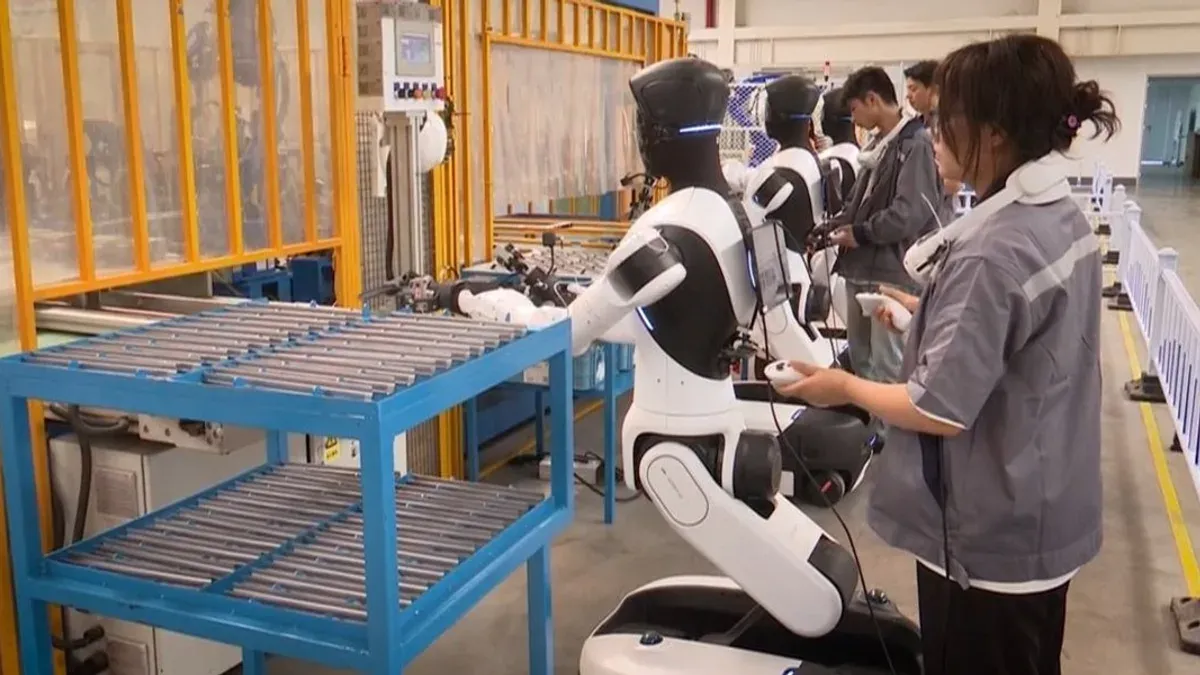
Chinese manufacturers are also deploying AI inside their plants. Computer-vision systems inspect components for defects, algorithms predict when machinery will need maintenance and digital models allow engineers to test production changes before modifying physical assembly lines.
At a TCL electronics plant in Huizhou, Guangdong province, a robotic system uses three-dimensional vision and AI to connect television ports, a job previously performed manually. The company says the system has achieved a product pass rate of 99.8%, according to a report published by Guangdong authorities.
Such systems promise more consistent quality and fewer interruptions. They can examine thousands of products, detect patterns that human inspectors might miss and adjust machinery as conditions change. For manufacturers producing electronics, automobiles or precision components, even a small reduction in defects can generate substantial savings.
Beijing is encouraging the transition. The government has made “AI plus manufacturing” part of its industrial strategy, linking artificial intelligence with efforts to modernize equipment and reduce reliance on foreign technology. In September, the central bank increased its technology-innovation and equipment-upgrade relending quota by 200 billion yuan, bringing the facility to 1.4 trillion yuan, or about $208 billion.
The low-cost funding is intended to encourage banks to lend to technology companies and manufacturers upgrading their production lines. It follows broader efforts to extend financial support to artificial intelligence, electronic information and research-intensive small businesses.
A technology boom with uneven benefits
The expansion is not reaching every part of China’s industrial economy. Large manufacturers recorded a September PMI of 50.6, but medium-sized companies remained in contraction at 49.7. Small manufacturers registered 48.9.
Employment also weakened. The manufacturing employment index fell to 48.4, suggesting that increased output is not necessarily creating more factory jobs. Automation can raise productivity while reducing demand for workers performing repetitive assembly, inspection and warehouse tasks.
New export orders remained below the expansion threshold, while outstanding orders were especially weak. That raises questions about whether factories are increasing production faster than final demand can absorb it.
China’s industrial profits also reveal the imbalance. Technology manufacturing has remained relatively strong, but excess capacity and soft domestic demand have placed pressure on prices in traditional industries. Industrial-profit data for August showed slower growth as manufacturers contended with intense competition and limited pricing power.
Economists therefore caution against treating September’s figures as evidence of a broad recovery. The official PMI was only slightly above 50, and some of the improvement followed the easing of weather disruptions that had affected production in August.
Still, the data show how AI is becoming an industrial force rather than merely a digital service. It is creating demand for new factories and equipment while making existing production lines faster and more automated.
The central question is whether that technology-led expansion can spread to smaller businesses, support wages and generate sustainable consumer demand. For now, China’s AI boom is helping factories produce more. Whether it can strengthen the wider economy remains much less certain.