🎙 Listen to a summary of this story
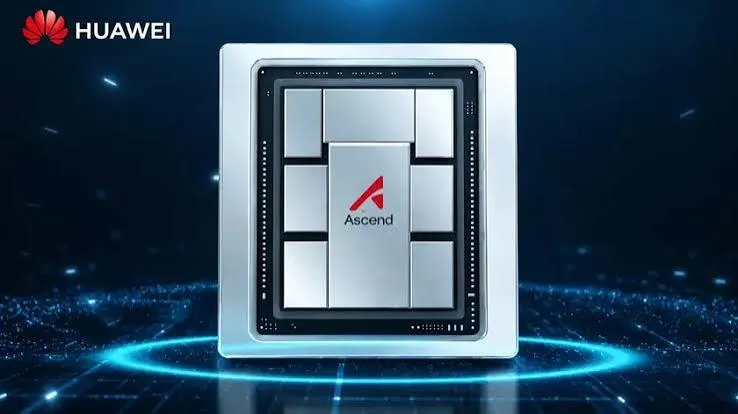
Huawei unveiled the Ascend 960 SuperPoD, integrating novel NPO technology to redefine the performance benchmarks for next-generation artificial intelligence infrastructure.
The launch signals a significant escalation in China's domestic semiconductor ambitions, positioning Huawei to compete directly with global hyperscalers relying on established GPU architectures for massive AI training and inference tasks.
The Ascend 960 SuperPoD is engineered specifically to address the escalating computational demands of large language models and complex deep learning workloads. The incorporation of NPO technology represents a key architectural advancement designed to optimize data flow and drastically reduce latency across massive parallel processing clusters.
From a strategic perspective, this hardware release is not merely an incremental product update; it represents a concerted effort by Huawei to establish a sovereign, high-performance computing ecosystem within China. By controlling the entire stack—from the chip design to the system integration—Huawei mitigates geopolitical risks associated with reliance on foreign silicon suppliers.
The SuperPoD architecture is designed for extreme scale-out capabilities. It facilitates the aggregation of multiple Ascend 960 processors into a unified computational fabric, allowing organizations to tackle datasets previously unmanageable by localized clusters. This capability is vital for the continued advancement of frontier AI research.
Architectural Innovation and Performance Metrics
Central to the Ascend 960's capability is the integration of the proprietary NPO (Neural Processing Optimization) technology. This feature allows the system to handle heterogeneous workloads with unprecedented efficiency, dynamically allocating computational resources based on the specific requirements of the AI model being executed.
Technical specifications indicate that the Ascend 960 SuperPoD achieves substantial increases in processing throughput compared to previous generations. While specific TOPS figures vary depending on the workload profile, the system demonstrates superior performance in mixed-precision training scenarios, a common requirement in modern transformer-based AI models.
The design emphasizes power efficiency alongside raw compute power. As AI infrastructure scales globally, the operational expenditure associated with cooling and power consumption becomes a critical constraint. Huawei claims the SuperPoD achieves a high performance-per-watt ratio, making large-scale deployment more economically viable for enterprise customers.
Furthermore, the SuperPoD is built with a focus on seamless integration into existing cloud and edge computing environments. Its standardized interfaces allow for quicker deployment timelines, reducing the barriers to entry for companies looking to transition their AI operations onto Huawei's ecosystem.
Implications for Global AI Deployment
The introduction of the Ascend 960 SuperPoD carries significant implications for the competitive landscape of global AI hardware. It strengthens the narrative that domestic semiconductor champions can deliver performance competitive with, and in some specialized areas surpass, established American and European silicon leaders.
For technology firms seeking to build AI infrastructure within the Chinese market, the Ascend 960 SuperPoD offers a robust, locally supported alternative. This localized supply chain stability is a major selling point in an environment of increasing international trade scrutiny.
Industry observers suggest that the success of this SuperPoD will catalyze further investment in China's advanced semiconductor fabrication capabilities. Huawei's aggressive rollout strategy suggests a long-term commitment to creating a self-sufficient, world-class AI computing foundation.
The Ascend 960 SuperPoD solidifies Huawei's strategic pivot toward dominating the high-performance computing sector, signaling a pivotal moment in the race for AI hardware supremacy.