🎙 Listen to a summary of this story
Huawei is strategically pivoting its chip development, prioritizing domestic self-sufficiency and architectural resilience over immediate parity with Western high-end foundry nodes.
The company's renewed focus signals a calculated shift away from solely relying on mastering advanced process nodes offered by global foundries. Instead, the current strategy emphasizes building a comprehensive, vertically integrated indigenous ecosystem capable of sustaining critical technological functions within China. This pivot is not merely reactionary to external sanctions but represents a deep commitment to establishing foundational control over core intellectual property and supply chain pillars.
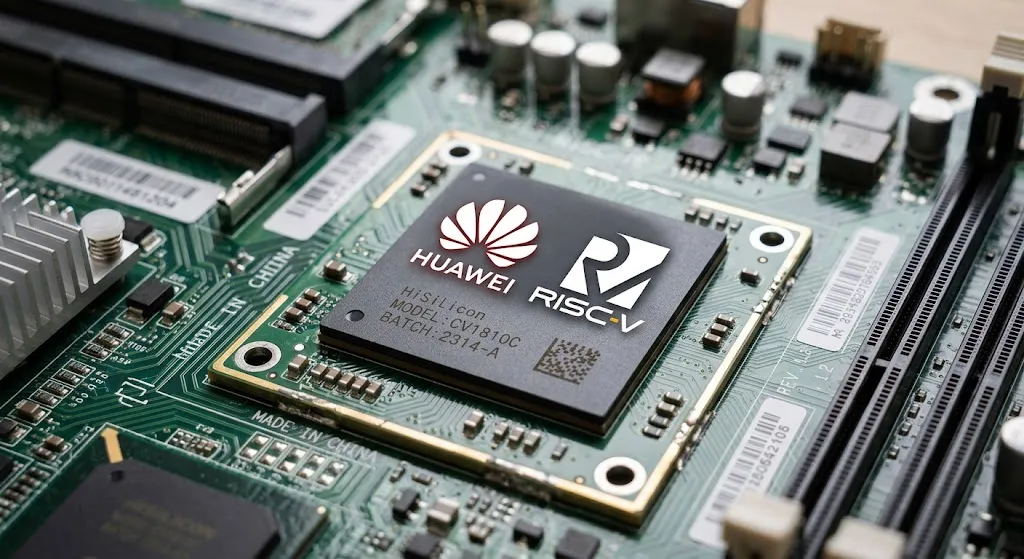
Central to this revised approach is the accelerated adoption and development around open-source architectures, notably RISC-V. Unlike traditional x86 or ARM dependencies, RISC-V offers an alternative hardware instruction set that allows for greater customization and circumvents potential export control choke points. Huawei’s efforts involve collaborating with domestic academic institutions and semiconductor firms to create specialized chip designs tailored for specific applications, such as advanced AI processing and next-generation telecom infrastructure.
This diversification is visible across multiple product lines. For instance, in the telecommunications sector, the emphasis is on developing chips optimized for 5G/6G standards that integrate fully within Chinese domestic supply chains. By focusing on customized silicon rather than generalized high-performance computing units, Huawei aims to create technological moats that are difficult for external entities to disrupt or control.
The company's goal is effectively de-risking its entire technology stack by ensuring that key operational components—from the physical chip design (EDA tools) to the manufacturing processes and final application software—are sourced domestically whenever possible. This holistic approach underscores a recognition that global supply chain dependency poses an unacceptable level of strategic risk for China's high-tech ambitions.
Addressing Global Constraints through Localization
The underlying impetus for this intensive localization drive remains the stringent export controls imposed by Western nations, particularly the United States. These restrictions have severely limited access to cutting-edge fabrication technologies and advanced materials, forcing major Chinese tech firms to recalibrate their global ambitions into hyper-focused domestic strategies.
While maintaining a presence in international markets where possible, Huawei has demonstrably allocated resources toward building out parallel industrial ecosystems within mainland China. This involves attracting capital and talent to semiconductor clusters that can support the full cycle of chip creation: design, verification, fabrication planning, and testing.
Industry analysts suggest this strategic redirection reflects a broader national policy objective: achieving technological sovereignty in sectors deemed critical for future economic growth. The focus is shifting from maximizing performance benchmarks—a race often dictated by global foundry availability—to ensuring operational continuity and resilience regardless of geopolitical pressures.
The ability to rapidly scale up domestic chip production, even if it initially lags behind the bleeding edge set by TSMC or Samsung using the most advanced nodes, is viewed as a strategic win. It guarantees that core technological services, such as national digital infrastructure and defense systems, remain operational and independently upgradeable.
Ultimately, Huawei's chip strategy represents a mature transition from simply attempting to purchase global parity to actively engineering an alternative, self-sustaining technological path. This deep dive into domestic capabilities signals China’s sustained commitment to becoming a self-reliant powerhouse in the semiconductor industry, reshaping both its internal economic landscape and its role within global technology governance.